Paul Thulin-Jiménez
Index · a working biography2000–2028 · 14 bodies of work · 20 terms
Five movementsThe periods overlap. Each one left terms behind.
I
2000–2010

Making worlds

I built worlds to tell stories about bigger ideas. American icons staged as a hungover party. In Dissolving Boundaries one photographic object carries separate histories at once, each written for a different audience. Machines builds its world from found things. By 2010 the made world was drifting toward photo-illustration, and I turned away from it.

II
2012–2016

The found world

The camera turns to what culture has already made: devotional kitsch, toy guns and targets, advertising, libraries. Each is met differently: with regard, with watchfulness, with critique, with care.

III
2009–2019

Film, aura and the doculiterary

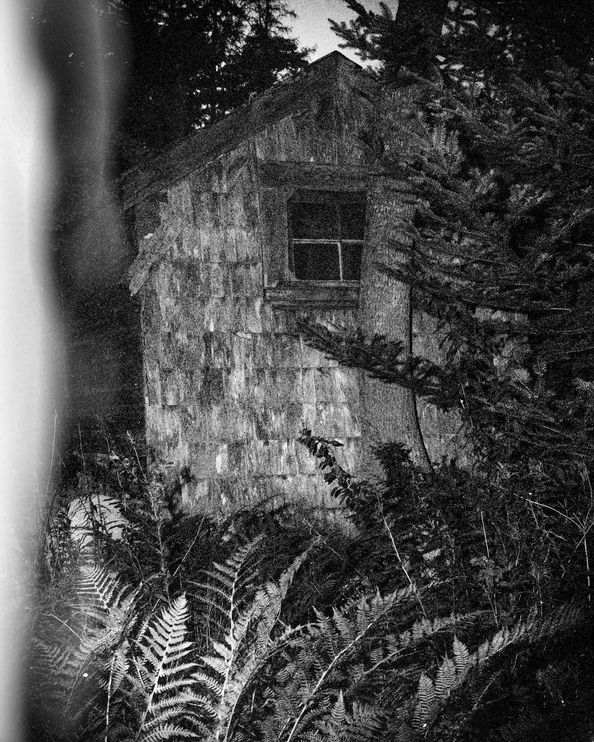
Film becomes a material language, its defects and decay kept rather than hidden. Family lore is enacted at night with flash, and the archive is built as a room. Fact and lore are held in one sequence.

IV
2016–2023

Return, fieldwork, the archipelago

Recorded interviews in Puerto Rico changed the knowledge I had been handed. The books withhold captions, and authorship opens to others.

V
2024–

Inside the tangle

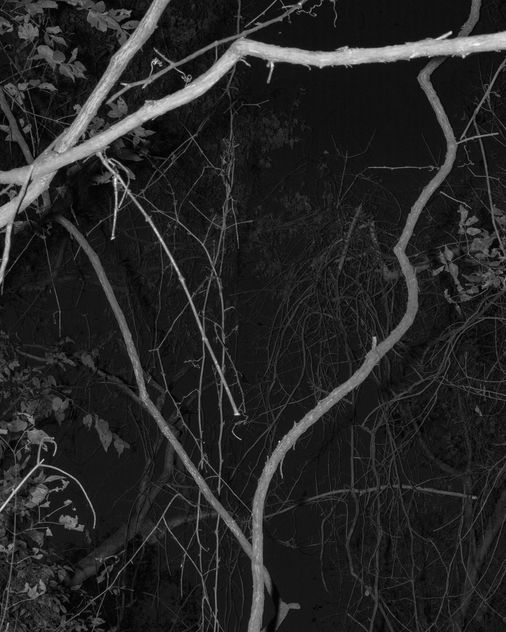
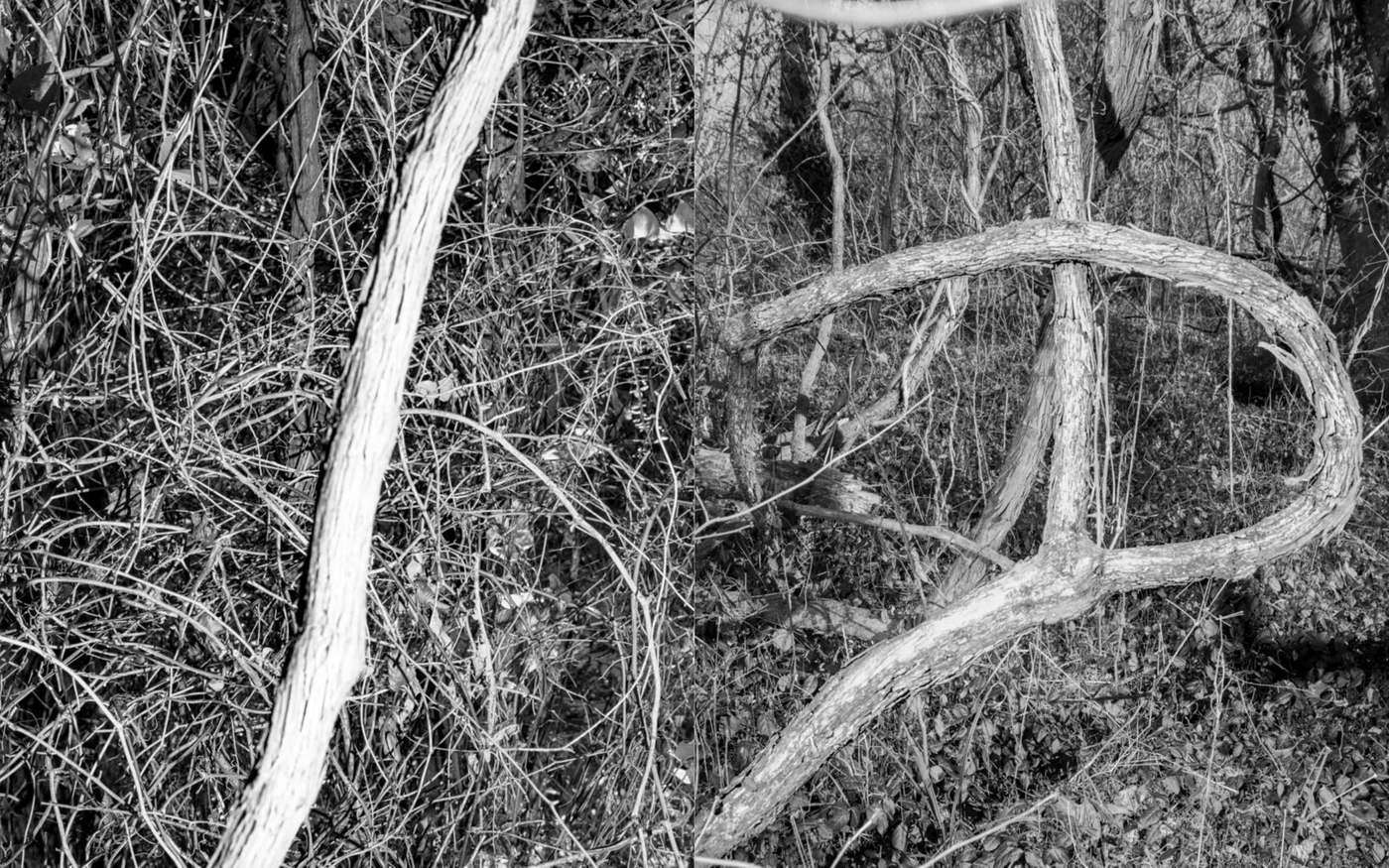
Landscape disturbed from within, close and with flash, and made with poets. Sol y Sombra returns to the family archive in my own hand.

Terms of the work

My practice is research carried out through photographs, books, objects and writing. Its questions belong to the humanities: how a story comes to carry knowledge, who gets to hold it, what it can claim to be true, and what is lost when it is left out. The methods are archival work, oral history and fieldwork, close study of the photograph as a material object, and sequence, the order in which pictures and words make meaning.

Archives, recorded voices and stories keep kinds of truth that measurement alone cannot, and without them we lose part of what it means to be human. Each project tests these questions in a particular place: a family’s land in Maine, the island and diaspora of Puerto Rico, the rivers of Virginia. Along the way I have had to name ways of working. These are the terms, in the order I arrived at them, with what each one taught me.

Each term lists the works it runs through. Kin are the books, films, records and artworks it sits beside, with what each one is and why it belongs here. Kin is not a claim of influence; where I named a source myself it is marked ◆. Pick a work below to see which ideas it carries, or hover over a red-dotted kin to see where else it returns.

Follow a work
2000–2014

Spectacle

Images that arrive already made: a nation’s myths staged as entertainment, consumer waste raised into monuments, the family video, the logo written across sky, street and satellite. The work borrows their gloss and scale in order to turn them around.

Spectacle is not a layer laid over the world but the way much of the world now reaches us. There is no outside to photograph it from, so the critique has to use spectacle’s own tools: montage, appropriation, the product shot, the screen capture.

Kin
Don DeLillo, Underworld (1997) ◆

A novel of American life from 1951 to the 1990s narrated by a waste-management executive, moving through the Fresh Kills landfill, decommissioned B-52 bombers repainted as an artwork in the desert, the Watts Towers built from broken tile and glass, nuclear blasts sold as waste disposal, and a home video of a highway killing replayed on television.

My Machines series built a future landscape out of thrift-store trinkets and broken machine parts, and it has always reminded me of Underworld: waste as “the secret history, the underhistory,” bombers turned into art, a tower made of what was thrown away.

Guy Debord, The Society of the Spectacle (1967)

Debord argues that in modern consumer society, social relations between people are carried by images.

PYADE’s claim that much of what we see has already been bought, at every scale from the Indy 500 sky to a wrapper on the sidewalk, is Debord’s claim made with a camera.

Roland Barthes, Mythologies (1957)

Short essays reading wrestling, soap ads and magazine covers as myths that make a culture’s values look natural.

From Oz to Eden stages the same kind of national myth, Mickey Mouse beside the Statue of Liberty, so that its entertainment shows through as ideology.

Robert Venturi, Denise Scott Brown and Steven Izenour, Learning from Las Vegas (1972)

Architects who studied the Las Vegas Strip as a landscape of signs, where advertising matters more than the buildings behind it.

PYADE photographs the landscape the same way, as a surface for logos, whether read from a car, from the air or from Google Earth.

Hito Steyerl, “In Defense of the Poor Image,” e-flux journal 10 (2009)

An essay on the compressed, copied, low-resolution images that circulate online, and what their degraded copies reveal about how images now move.

PYADE's Street View and Google Earth captures are poor images in Steyerl's sense, taken from a screen and still carrying the logos they record.

“waste is the secret history, the underhistory”

Don DeLillo, Underworld, 1997
2000–2013

Learned roles

Identity handed down through uniform, toy and gesture: the Catholic military school behind Dissolving Boundaries, the pink shoe and the plastic rifle of Limelight Firefight.

Roles are taught before they can be chosen, and mostly through things rather than words. Watching how a child, a student or a nation is steered reveals more than judging where it arrives.

Kin
Michel Foucault, Discipline and Punish (1975) ◆

Foucault traces how prisons, schools and barracks shape bodies through drill, routine and constant watching.

Dissolving Boundaries grew from years at a Catholic military school, and its plates describe ‘Discipline hunting for Hidden Desires.’

also in Meta-history
Ellsworth Kelly, Colors for a Large Wall (1951) ◆

Sixty-four canvas panels in a grid, each one flat color with hard edges.

Limelight Firefight sets real paper targets shot by children in Kelly’s kind of formal order, so the marks of violence sit inside clean fields, held under control.

John Berger, Ways of Seeing (1972)

A BBC series and book that criticized how European painting and advertising cast men as the ones who act and women as the ones to be looked at.

Limelight Firefight watches that same split being taught to children, being seen or doing the fighting, without judging the families; the project page cites Berger.

Judith Butler, Gender Trouble (1990)

Butler argues that gender is not something a person has but something repeated into being.

The home videos in Limelight Firefight record the early repetitions, the pose rehearsed for a parent’s camera, before a child can choose them.

JeongMee Yoon, The Pink and Blue Project (2005–)

Photographs of children in their rooms surrounded by all their pink or all their blue possessions, revisited as the children grow.

Like Limelight Firefight, it shows roles taught through things rather than words, and it watches without judging the families.

“the soldier has become something that can be made”

Michel Foucault, Discipline and Punish, 1975
2006–

Meta-history

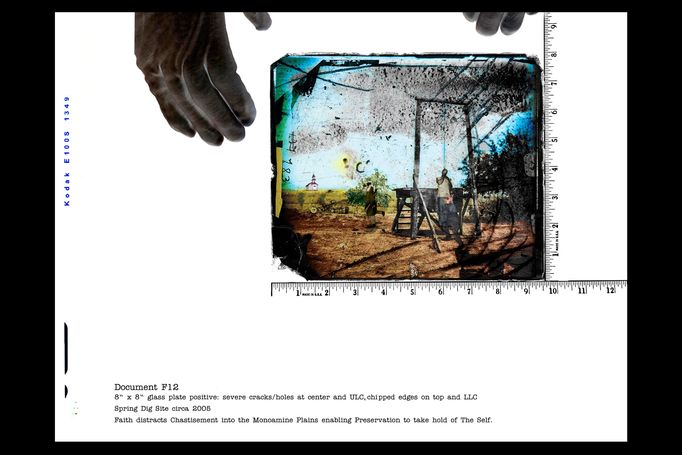
One object given several histories at once, each by a different author for a different audience: material fact, institutional record, mythology, psychoanalytic reading.

A photograph’s story is assembled by whoever holds it, for whoever is listening. The archive’s authority is part of its fiction, so the later work asks who else could hold it: family, neighbors, the thirteen writers of 100 Yrs.

Kin
Michel Foucault, The Archaeology of Knowledge (1969) ◆

Foucault treats the archive not as a store of documents but as the set of rules deciding what can be said at a given time.

Dissolving Boundaries invents an archival system, accession numbers and condition reports included, to show that the rules make the record.

Gilles Deleuze and Félix Guattari, “Rhizome,” introduction to A Thousand Plateaus (1980) ◆

A model of thought as a root system with many entries and no center, set against the single trunk of the tree.

Dissolving Boundaries is subtitled ‘A Rhizomatic Psycho-History’: each plate has several histories and none is the root.

John Loengard, Celebrating the Negative (1994) ◆

A LIFE photographer’s portraits of the original negatives of famous photographs, some held in hand, with the story of how each became its print.

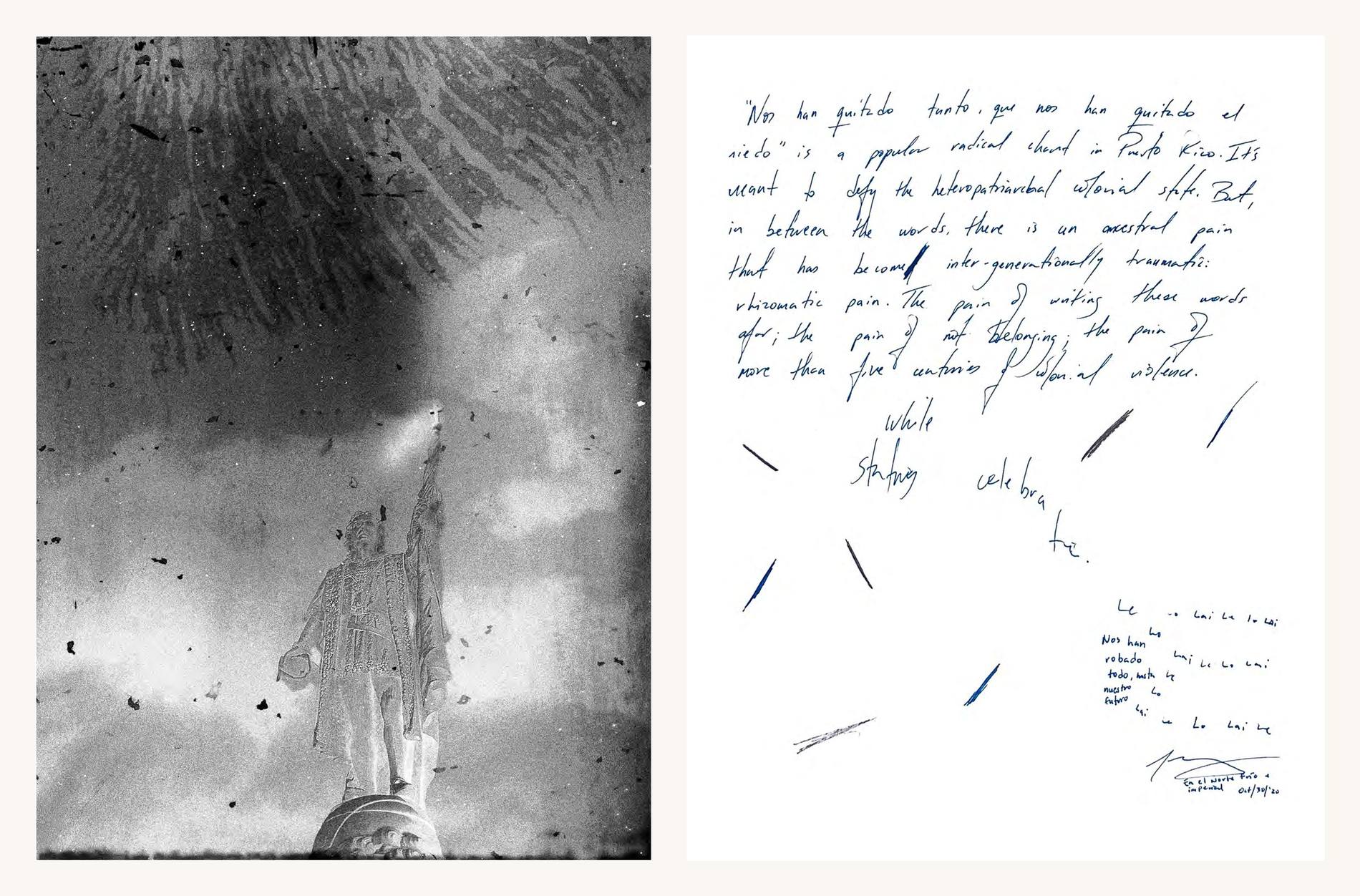
The negative as its own object with its own history, separate from the print and from the captions institutions give it: the idea behind the plates of Dissolving Boundaries.

Werner Herzog, “Minnesota Declaration” (1999) ◆

Herzog separates the accountant’s truth of facts from a deeper truth found through fabrication.

The plates of Dissolving Boundaries are fabricated evidence built to say something the record cannot.

also in Enacted lore
Joan Fontcuberta and Pere Formiguera, Fauna (1987)

An invented natural-history archive of impossible animals, with field notes, photographs and specimens credited to a fictional German zoologist.

Like the Dissolving Boundaries plates, it borrows the look of institutional evidence to show how much authority the look alone carries.

Walid Raad / The Atlas Group, The Atlas Group Archive (1989–2004)

Documents about Lebanon’s civil wars attributed to invented donors, presented as a real archive.

Its archive with many invented authors sits beside Dissolving Boundaries, where material fact, institutional record, myth and psychoanalysis each speak for a different author.

“Toda fotografía es una ficción que se presenta como verdadera.”

Every photograph is a fiction that presents itself as true.

Joan Fontcuberta, El beso de Judas: fotografía y verdad, 1997
2006–

Enacted lore

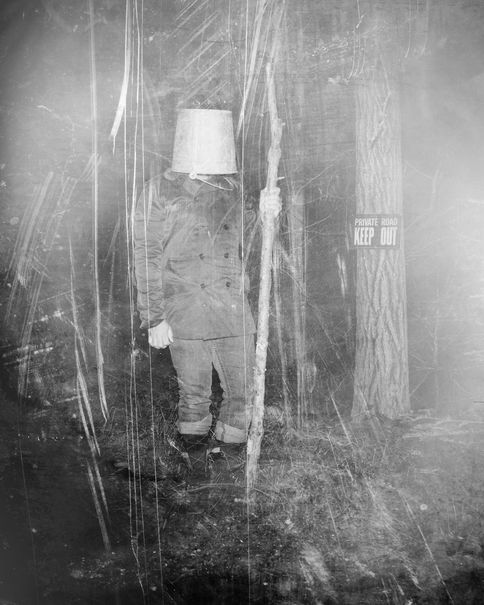
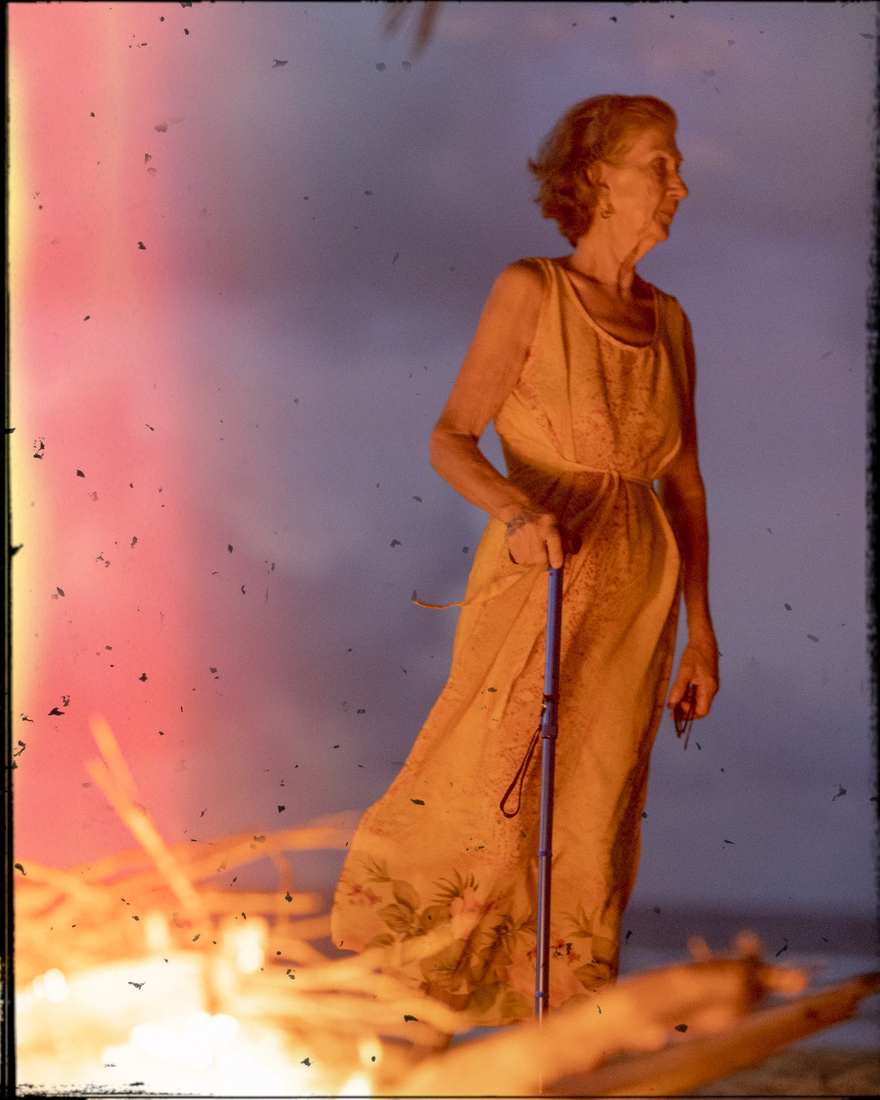
The mystical acted out in plain places: masked figures in a field, a salt room built as a workplace, family at night in the Maine woods, ritual in gold light, a grandmother remembered as a bruja. Theatrical enactment pointed toward the uncanny.

Lore is not decoration laid over the facts. Staging it is one way of telling what happened, and the marvelous belongs to the real rather than escaping it.

Kin
Mario Vargas Llosa, El hablador (1987) ◆

Myth told as lived history by a storyteller who holds a people together.

Pine Tree Ballads grew from a grandfather’s spoken tales of the land, where telling and believing are the same act.

Werner Herzog, “Minnesota Declaration” (1999) ◆

A filmmaker’s manifesto against fly-on-the-wall documentary, arguing for a “poetic, ecstatic truth” reached through invention and staging.

The enacted lore of Pine Tree Ballads and Labor Omnia Vincit stages what cannot be photographed as fact, to reach a truer account of a place.

also in Meta-history
Joshua Oppenheimer, The Act of Killing (2012) ◆

Men who led death squads in the Indonesian killings of 1965–66, when hundreds of thousands of alleged communists were murdered, are invited to reenact what they did in the film genres they love: gangster scenes, a western, a lavish musical number. Herzog and Errol Morris were executive producers.

A documentary that reaches its truth through staging. The reenactments become big production pieces, and in making them the men reveal what no interview could. It made me aware of what enactment can do.

Lynne Ramsay, Ratcatcher (1999) ◆

In a Glasgow housing scheme during the 1970s bin strike, a boy ties his pet mouse to a balloon, and the film follows it up to the moon, where it joins other mice.

Magical realism inside a hard, real place: you are not always sure what is real and what is imagined, and the marvel sits inside the ordinary day, as the lore does in Pine Tree Ballads.

Alejo Carpentier, prologue to The Kingdom of This World (1949)

Carpentier’s claim that in the Caribbean and Latin America the marvelous is part of lived reality, not added to it: lo real maravilloso.

Pine Tree Ballads and Labor Omnia Vincit stage lore as part of what happened, and the same idea carries into the Puerto Rico work.

Gabriel García Márquez, One Hundred Years of Solitude (1967)

A family saga in which the impossible is told in the flat voice of fact.

I think of Pine Tree Ballads as a poetic memoir in the spirit of magic realism, a family history where a creaking floor can become an ancestor.

Ralph Eugene Meatyard, The Family Album of Lucybelle Crater (1974)

A family album in which Meatyard’s wife, friends and family all wear the same masks, published after his death.

It enacts the uncanny inside family life with family members as actors, as Pine Tree Ballads does at night in the Maine woods.

Clarence John Laughlin, Ghosts Along the Mississippi (1948)

Staged, often veiled figures photographed in ruined Louisiana plantation houses.

Laughlin used theatrical figures to bring out the history lodged in a place, as Dissolving Boundaries and Labor Omnia Vincit do.

Lieko Shiga, Rasen Kaigan (2013)

Made over years as the resident photographer of Kitakama, a coastal village in northeast Japan, staging scenes with residents at night and with flash from their stories and memories, before and after the 2011 tsunami.

Like Pine Tree Ballads, it enacts a community's lore at night with flash and the people who carry it, so that staging becomes a way of telling what happened.

“There is such a thing as poetic, ecstatic truth. It is mysterious and elusive”

Werner Herzog, “Minnesota Declaration,” 1999
2006–

Aura as photographic truth

The material’s own history kept in the picture: cracked glass, light leaks, chemical burns, newsprint, gold toning, the Kodak backprint showing through a portrait.

A clean image can look like illustration. Damage, decay and the surface of the print carry time, and admitting them tells a truer story than hiding them.

Kin
Walter Benjamin, “The Work of Art in the Age of Mechanical Reproduction” (written 1935, first published 1936) ◆

Benjamin argues that a reproduction loses the original’s aura, its ‘presence in time and space,’ its unique existence where it is. (He first sketched aura in “Little History of Photography,” 1931.)

Pine Tree Ballads and Dissolving Boundaries turn this around: a reproducible medium is given back a unique history through cracks, burns and decay.

Roland Barthes, Camera Lucida (1980)

A short book on the photograph as a trace of something that was really there, and on the detail that wounds the viewer.

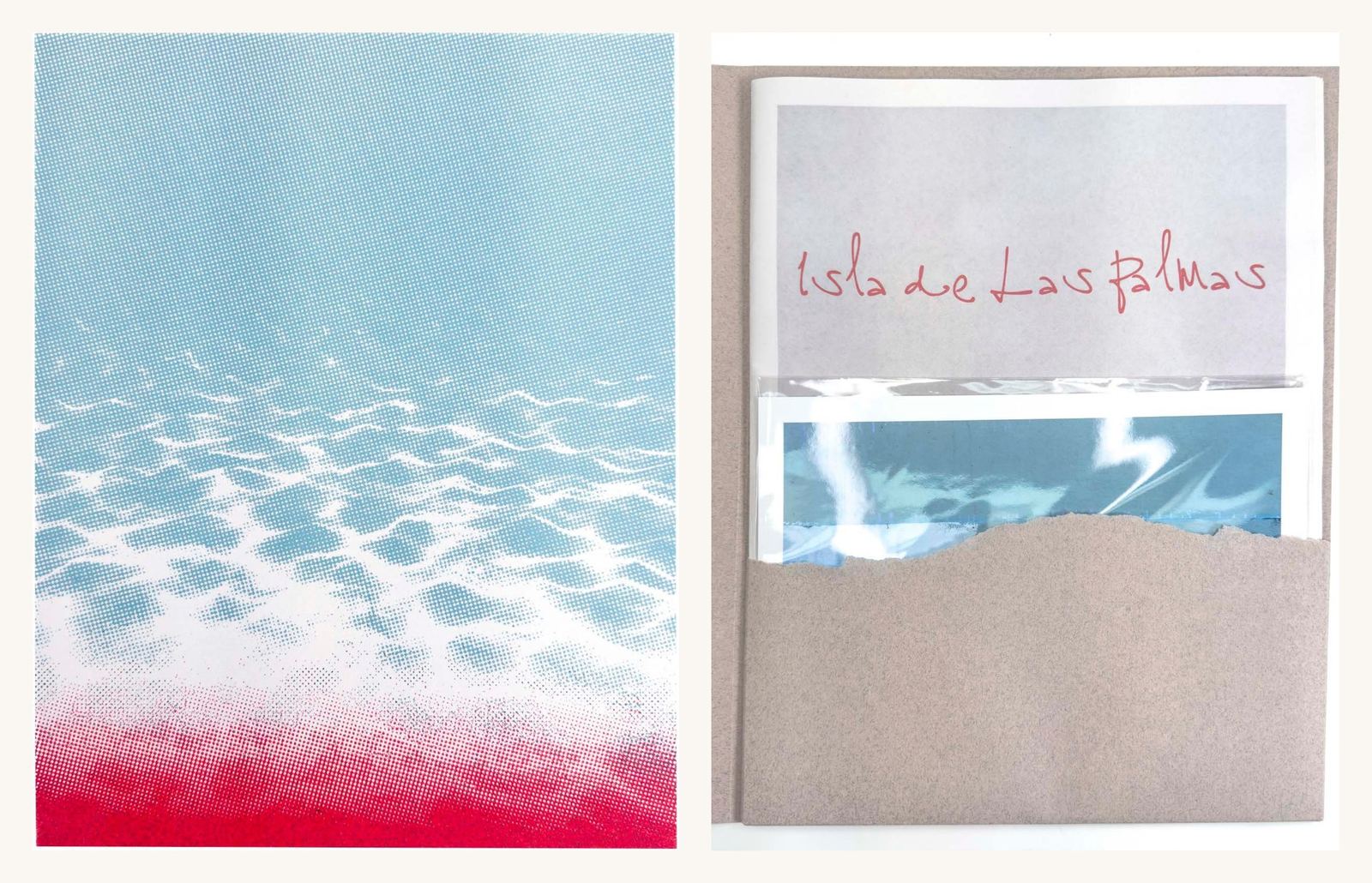
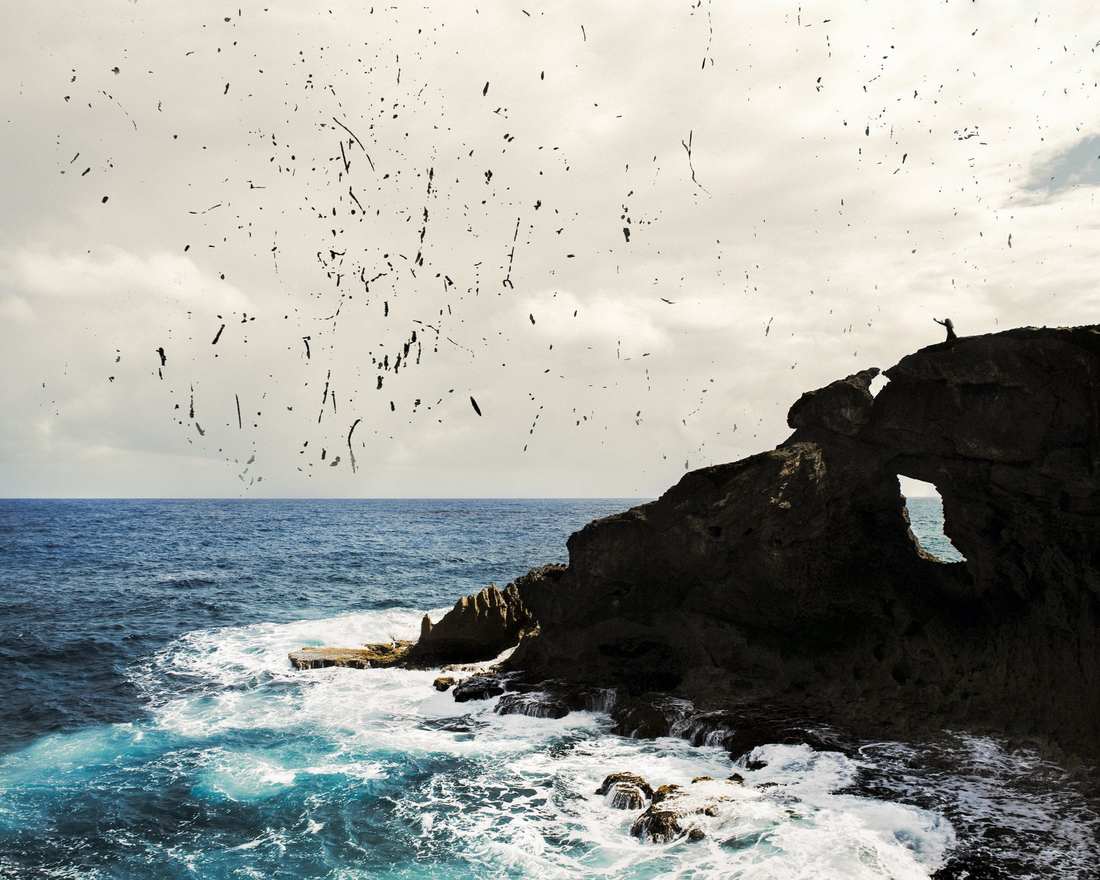
The damaged surfaces in Pine Tree Ballads and Isla de Las Palmas insist that the picture is also a thing that has lived through time.

Sally Mann, What Remains (2003)

Photographs of decay and the dead, made with wet collodion whose flaws Mann keeps in the image.

Like Pine Tree Ballads, it treats the accidents of the process as part of the picture’s truth.

also in Suturas
Bill Morrison, Decasia (2002)

A film made entirely from decaying nitrate footage, set to an orchestral score by Michael Gordon.

The decay becomes the subject, as the corroded plates of Dissolving Boundaries do.

Elizabeth Edwards and Janice Hart, eds., Photographs Objects Histories: On the Materiality of Images (2004)

Essays treating photographs as physical objects, with backs, mounts, albums and wear, whose meanings change as they are handled and kept.

The Kodak backprint showing through a portrait in Sol y Sombra and the newsprint pages of Isla de Las Palmas make the same argument: the object is part of what the photograph says.

Geoffrey Batchen, Forget Me Not: Photography and Remembrance (2004)

A study of vernacular photographs that people framed, painted, stitched and wrote on to hold memory.

The family photographs in Sol y Sombra and the handwriting on the plates of Dissolving Boundaries belong to this history of pictures made to be touched and added to.

“that which withers in the age of mechanical reproduction is the aura of the work of art”

Walter Benjamin, “The Work of Art in the Age of Mechanical Reproduction”, 1936
2009–

Doculiterary

Documentary in which meaning gathers through sequence, metaphor and recurrence rather than in a single picture. Fact and lore held in one telling.

A great-grandfather’s stories were neither fact nor fiction, and documentary alone could not hold them. Meaning comes from order and return, the way a book or a ballad makes it.

Kin
W. G. Sebald, The Emigrants (1992; English 1996) ◆

Four lives of exile told in prose with uncaptioned photographs, where the reader cannot separate document from invention.

Pine Tree Ballads holds fact and lore in one telling in the same way, and Sol y Sombra takes Sebald as a direct model.

also in Suturas
Truman Capote, In Cold Blood (1966) ◆

A true crime account written with the tools of the novel, which Capote called a “nonfiction novel.”

Pine Tree Ballads and Sol y Sombra hold documented fact and literary telling in one book, with the order of the story carrying the meaning.

Hunter S. Thompson, “The Kentucky Derby Is Decadent and Depraved” (1970) ◆

The first piece called gonzo: the writer inside the story, subjective and exaggerated, with Ralph Steadman’s drawings beside the text.

I place myself inside the work rather than outside it, a participant in the family, island and land I photograph.

Patti Smith, M Train (2015) ◆

A memoir of grief for her husband and others, moving between dreams and daily routine, set with her own photographs of cafés, graves and the possessions of dead writers.

Sol y Sombra, the book I am making now, also moves between grounded memoir and a dreamlike register, with my photographs set inside the writing; Smith is one of the writers I keep near it.

Kurt Vonnegut, Slaughterhouse-Five (1969) ◆

A novel that opens in Vonnegut’s own voice on his failure to write about the firebombing of Dresden, which he survived as a prisoner of war, then follows Billy Pilgrim, “unstuck in time,” among aliens who see every moment at once; Vonnegut steps into the story to say “That was I.”

Pine Tree Ballads holds fact and lore in one telling, and Sol y Sombra starts from a real death in my family; Vonnegut shows how a true event can be carried by invention, with the author standing inside the book.

Robert Frank, The Americans (1958; US edition 1959)

Eighty-three photographs ordered so that meaning builds through recurring motifs (flags, cars, jukeboxes) rather than any single picture.

It is the photobook model for meaning that ‘accumulates through sequence, metaphor and recurrence,’ which is how I define the doculiterary.

Wright Morris, The Home Place (1948)

A novel of a Nebraska family farm with Morris’s own photographs of the place on every facing page.

A family place told through photographs and literary prose together, as in Pine Tree Ballads at Gray’s Point.

Walter Benjamin, “The Storyteller” (1936)

Benjamin’s essay on the storyteller who passes experience from mouth to mouth, leaving explanation to the listener.

Pine Tree Ballads grew from a great-grandfather’s spoken tales, which were neither fact nor fiction.

Anne Carson, Nox (2010)

An elegy for Carson's brother made as a single folded sheet in a box: family photographs, letters, fragments and a Latin poem translated word by word.

Like Sol y Sombra, it grows from a family death and builds meaning from archive, image and writing placed side by side, in a book that is also an object.

“All this happened, more or less.”

Kurt Vonnegut, Slaughterhouse-Five, 1969
2012–2016

Regard

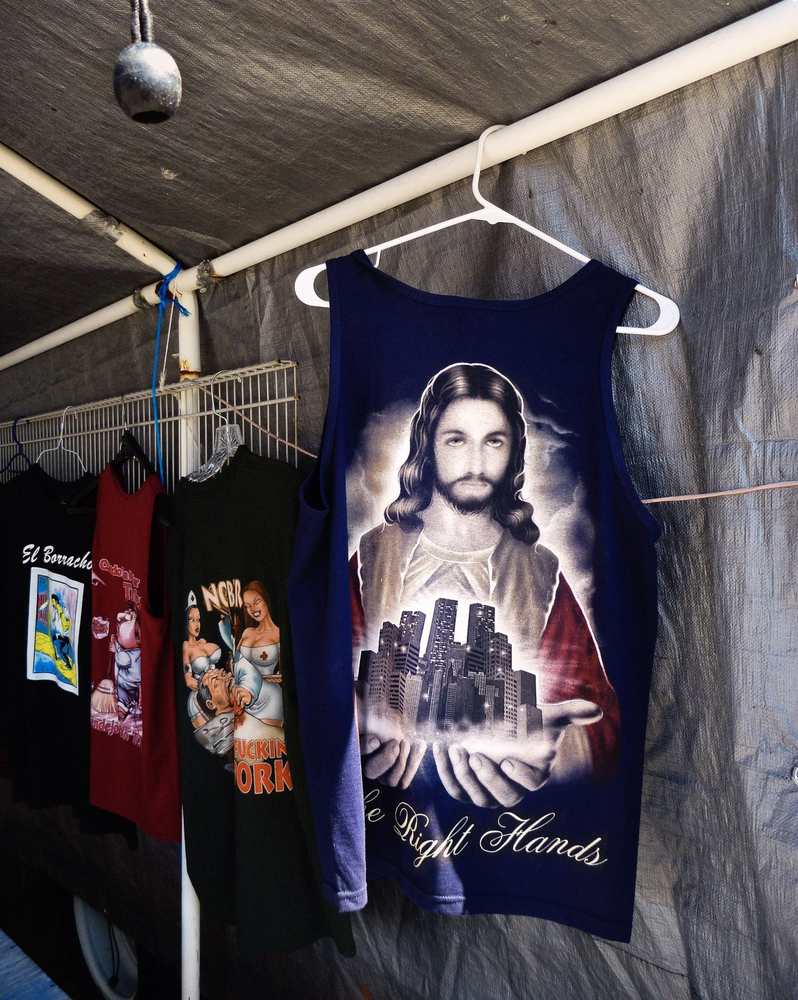
Objects other people made, used, prayed with or shelved, looked at closely and without the protection of irony: devotional kitsch at a flea market, the working library, the toys and videos of other families.

My mockery said more about me than about the objects. Things that were handled and kept had done real work for someone, and a photograph can honor that without giving up its critique.

Kin
David Foster Wallace, “Joseph Frank’s Dostoevsky” (1996), in Consider the Lobster (2005) ◆

An essay on Frank’s biography of Dostoevsky that asks why contemporary art seems to need an ironic distance from deep convictions and desperate questions, faith among them.

I began Flea Jesus with that ironic distance from Christian objects, and over the years of the project I traded it for humility toward what they had done for people.

Mary Oliver, “The Summer Day” (1990), heard in Wild and Precious: A Celebration of Mary Oliver (2023) ◆

A poem that watches a grasshopper eating sugar from the speaker’s hand and admits not knowing exactly what a prayer is, only how to pay attention.

Flea Jesus began in mockery and ended in attention; I did not have to know what the plaster saints meant to a believer to see that they had been prayed with, and Oliver’s attention without certainty is the stance I arrived at.

Susan Sontag, “Notes on Camp” (1964)

Sontag’s essay on the love of the unnatural and exaggerated, a way of enjoying things through irony.

It names the stance I brought to the flea market and then outgrew in Flea Jesus.

Colleen McDannell, Material Christianity (1995)

A history of American Christians’ ordinary religious objects, from Bibles to cemetery goods, taken seriously as lived faith.

Flea Jesus arrives at the same view: a plaster saint on a nightstand did real work for someone.

Candida Höfer, Libraries (2005)

Frontal, unpeopled photographs of libraries around the world, attentive to shelves, light and order.

Bibliophilia looks at working libraries with the same patience, closely enough that the everyday turns almost abstract.

“I don’t know exactly what a prayer is. / I do know how to pay attention”

Mary Oliver, “The Summer Day,” 1990
2013–

The archive as a room

The archive built as a space to enter: a creaking floor, black pepper in the air, salt underfoot, silk prints hung from rails, a book that has to be held and tilted.

Some knowledge only arrives through the body. Like light in a cathedral, a space can prepare a person to meet the myth before any picture explains it.

Kin
Hannah Arendt, The Human Condition (1958) ◆

Arendt separates labor, the endless round of keeping life going whose products are used up almost as soon as they are made, from work, which makes durable things, and from action.

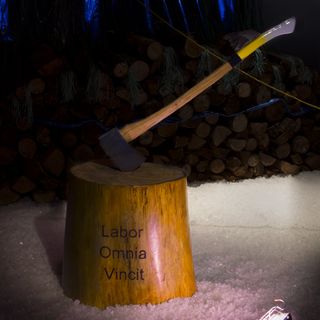
PTB Labor Omnia Vincit comes from a motto carved over our door in Maine, work conquers all, and from summers that were labor rather than vacation; Arendt’s distinction names what the installation did, turning a century of labor that left little behind into a room you can walk through.

Gaston Bachelard, The Poetics of Space (1958)

A study of how houses, cellars, attics and corners hold memory and daydream.

Labor Omnia Vincit rebuilds the Maine house from memory, down to the bedroom’s paint color and the plaster bat.

Maurice Merleau-Ponty, Phenomenology of Perception (1945)

Merleau-Ponty argues that we know the world first through the body, not as detached observers.

Labor Omnia Vincit asks to be met ‘with the whole body rather than as a sequence of pictures’: creaking floor, pepper, salt underfoot.

Rothko Chapel, Houston (1971)

A non-denominational chapel built around fourteen dark Rothko paintings, where light and space prepare a visitor for contemplation.

The cathedral experience was my aim in Labor Omnia Vincit, and the Rothko Chapel is its modern secular form.

Ann Hamilton, tropos (1993)

An installation at Dia in New York: a floor covered in horsehair, a figure burning away lines of text, sound and smell filling the room.

Like the salt room, it makes material, smell and sound carry meaning before any image does.

Dayanita Singh, File Room (2013)

Photographs of paper archives in India, bundles, shelves and files, part of Singh's larger practice of portable museums and book-objects.

Labor Omnia Vincit and the Isla de Las Palmas installations build the archive as a place to enter, and Singh's work treats the archive as a room first and a record second.

“Over and above our memories, the house we were born in is physically inscribed in us.”

Gaston Bachelard, The Poetics of Space, 1958
2016–

Listening first

Recorded interviews and conversations that come before the photographs and change them.

The history I had been handed was altered by what I heard. The pictures follow the listening, and the voices keep shaping the work even when they stay off the page.

Kin
Mario Vargas Llosa, El hablador (1987; The Storyteller, 1989) ◆

A novel in which a narrator in Florence sees photographs of the Machiguenga of the Peruvian Amazon, alternating with the voice of a wandering storyteller who carries the people’s memory from group to group.

The history of Isla de Las Palmas came from listening before looking; the hablador is memory kept alive by being told again.

also in Enacted lore
Zora Neale Hurston, Mules and Men (1935)

Folklore Hurston gathered by going home to Florida as both insider and trained researcher.

My return to Puerto Rico in midlife, learning and being taught by family, put me in the same double position.

Alessandro Portelli, The Death of Luigi Trastulli and Other Stories (1991)

Oral histories showing that where people’s memories depart from the record is itself evidence of what events meant.

The history I had been handed was changed by what I heard; Portelli explains why those voices count as history.

Tina M. Campt, Listening to Images (2017)

Campt reads ordinary photographs of Black subjects, such as ID photos and prison portraits, by attending to their quiet frequencies rather than only what they show.

The pictures of Isla de Las Palmas and 100 Yrs follow what was heard first, and Campt gives a method for letting listening shape how photographs are read.

“Thanks to the things you tell us, it's as though what happened before happens again, many times.”

Mario Vargas Llosa, The Storyteller (El hablador), 1987
2021–

Opacity

No captions. Books that open fully to readers with lived or inherited knowledge, while others meet their surfaces, rhythms and gaps; an order felt before it can be named.

Explaining the island to outsiders repeats an old imbalance. Withholding is not a refusal to share but a way of sharing on other terms.

Kin
Eduardo Lalo, Los países invisibles (The Invisible Countries, 2008) ◆

Essays, chronicle and travel diary by the Puerto Rican writer and photographer on how Puerto Rico and other places at the edge are made invisible by the centers that describe them, and on what it means to write and see from inside such a place.

Of everything I have read, this book had the biggest impact on me. The uncaptioned Isla de Las Palmas books start where it starts: an island seen from outside and not seen at all, answered from inside.

Edward W. Said, Orientalism (1978) ◆

Said shows how European scholarship, literature and administration described “the Orient” for Western readers until the description stood in for the places and people themselves; the book’s epigraph is Marx’s line “They cannot represent themselves; they must be represented.”

The uncaptioned Isla de Las Palmas books start from Said’s problem: explaining the island to outsiders repeats an old imbalance of who gets to describe whom, so I withhold the explanation.

Édouard Glissant, “For Opacity,” in Poetics of Relation (1990)

Glissant claims the right not to be made transparent to others as the basis for real relation.

Isla de Las Palmas runs fifty photographs with no captions, open fully to readers with lived knowledge and on other terms to everyone else.

Doris Sommer, Proceed with Caution, When Engaged by Minority Writing in the Americas (1999)

Sommer reads Latino and Latin American books that deliberately hold back from outside readers, and argues the withholding is a strategy, not a failure.

It describes what the uncaptioned Isla book and the Guasábara sequence do: share on terms set by the insider.

Junot Díaz, The Brief Wondrous Life of Oscar Wao (2007) ◆

A Dominican family saga told from New Jersey, with its Spanish and its island slang left untranslated and unitalicized, and a second history of the Trujillo dictatorship running in the footnotes.

The book does not stop to translate itself for outsiders; a reader without the Spanish meets it on its own terms. The uncaptioned Isla de Las Palmas books make the same choice about the island.

“Escribir desde la invisibilidad significa ampliar el campo miope de lo visible.”

To write from invisibility means widening the myopic field of the visible.

Eduardo Lalo, Los países invisibles, 2008
2021–

Archipelagic documentary

Knowledge held in more than one place at once, island and diaspora, answering to no center.

No single point of view, my own included, can hold the island and its diaspora. The work has to move between them.

Kin
Eduardo Lalo, donde (2005) ◆

A book of photographs and writing about San Juan, walked and looked at from the margins of the Western map.

My own San Juan and Santurce pictures, in Isla de Las Palmas and Sol y Sombra, try to answer the island from inside it.

also in Opacity
Jorell Meléndez-Badillo, Puerto Rico: A National History (2024) ◆

A history of Puerto Rico told through the lives of ordinary and marginalized people as well as leaders, written by a Puerto Rican historian in the diaspora.

Meléndez-Badillo is one of the thirteen writers of 100 Yrs; his history of the island from below, written from 'the cold, imperial North,' sits beside the portfolio as a collaborator's work, not an influence.

Edward W. Said, “Reflections on Exile” (Granta 13, 1984), in Reflections on Exile and Other Essays (2000) ◆

An essay on exile as loss that also gives a double vision: the exile is aware of at least two cultures at once, an awareness Said calls, borrowing from music, contrapuntal.

Isla de Las Palmas, 100 Yrs and Sol y Sombra move between the island and the diaspora, and my own return in midlife put me in that double position; Said names the way both places stay present at once.

also in Opacity
Édouard Glissant, Traité du Tout-Monde (1997)

Glissant’s case for archipelagic thought: many centers in relation, set against continental thought that seeks one.

Isla de Las Palmas and 100 Yrs hold island and diaspora together with no single center, my own view included.

also in Opacity
Antonio Benítez-Rojo, The Repeating Island (1989)

A Cuban writer’s account of the Caribbean as a meta-archipelago whose culture repeats with difference across islands and diasporas.

Guasábara’s ‘forms crossing, repeating, disappearing and returning’ sits beside Benítez-Rojo’s repeating island.

Luis Rafael Sánchez, “La guagua aérea” (1983)

A crónica set on a night flight from San Juan to New York, treating the shuttle as one Puerto Rican place in motion.

100 Yrs gathers voices from both ends of that route into one box.

Frank Espada, The Puerto Rican Diaspora: Themes in the Survival of a People (2006)

Photographs Espada made from 1979 to 1981 in more than thirty Puerto Rican communities across the United States, from Hawaii to Hartford.

A photographic precedent for documenting Puerto Rico as a people spread across places rather than one island.

Yarimar Bonilla and Marisol LeBrón, eds., Aftershocks of Disaster: Puerto Rico Before and After the Storm (2019)

Essays, testimony and images by scholars, journalists and artists on Hurricane María, debt and colonial rule, written from the island and the diaspora together.

It gathers many Puerto Rican voices on both sides of the water without a single center, the same form Isla de Las Palmas and 100 Yrs take.

“this plurality of vision gives rise to an awareness of simultaneous dimensions”

Edward W. Said, “Reflections on Exile,” 1984
2013–

Shared authorship

Pictures authored with and by others: families’ own videos taken up as material, photographs answered by thirteen writers in their own hand, books made with poets.

Other people could carry what my photographs could not. Authorship widened from borrowing to handing over the page.

Kin
Ariella Azoulay, The Civil Contract of Photography (2008)

Azoulay argues that a photograph belongs to no one person but to everyone in the encounter it records.

100 Yrs acts on that idea: the people in and around the pictures write the archive.

Jim Goldberg, Rich and Poor (1985)

Portraits of San Francisco residents who wrote directly on their prints about their own lives.

The closest photobook precedent for 100 Yrs, where each writer answers a photograph in their own hand.

Wendy Ewald, Portraits and Dreams (1985)

Photographs and dreams made by children in Appalachian Kentucky with cameras Ewald gave them.

It hands over the camera and the page, the move I made as authorship widened from borrowing to giving.

Langston Hughes and Roy DeCarava, The Sweet Flypaper of Life (1955)

A book of DeCarava’s Harlem photographs with a fictional narrative by Hughes.

A poet and a photographer sharing authorship of one book, as I do with Cody-Rose Clevidence and Rubén Ramos Colón.

LaToya Ruby Frazier, The Notion of Family (2014)

Photographs of Frazier's family and hometown of Braddock, Pennsylvania, many made together with her mother, who is credited as a collaborator in the pictures.

Like 100 Yrs, it hands part of the authorship to the people in the pictures, so the record of a family and place is not made by the photographer alone.

“The photograph exceeds any presumption of ownership or monopoly and any attempt at being exhaustive.”

Ariella Aïsha Azoulay, The Civil Contract of Photography, 2008
2024–

Suturas

Short handwritten texts in my own voice, set under the photographs. Handwriting first appears on the fabricated plates, then in the thirteen letters of 100 Yrs.

Family memory and the document never fully close. A stitch holds both and shows the seam.

Kin
W. G. Sebald, Austerlitz (2001) ◆

A novel in which a man recovers a lost childhood through photographs, buildings and long prose, with images set into the text.

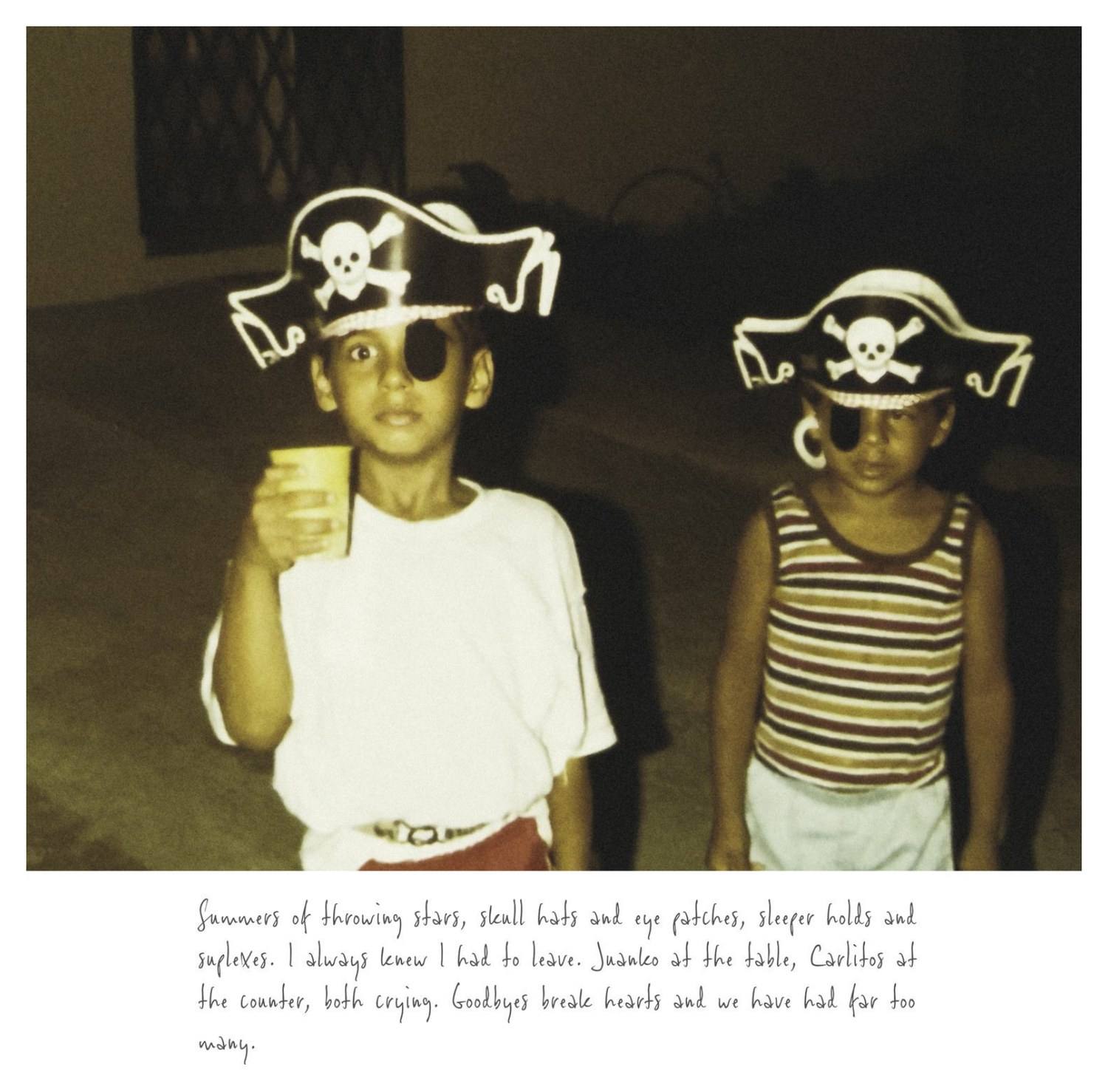
Sebald is one of the bases of Sol y Sombra: family memory recovered through images and writing that never fully closes.

also in Doculiterary
Teju Cole, Blind Spot (2017) ◆

Cole’s photographs, each paired with a short first-person text on the facing page.

The closest model for the suturas: a short passage in the photographer’s own voice stitched to one image.

Joan Didion, “On Keeping a Notebook” (1966) ◆

An essay on why she keeps notes: not for the facts of what happened but for how it felt to her.

The suturas are notes in my own voice under the picture, closer to how a memory felt than to what the record says.

Sally Mann, Hold Still: A Memoir with Photographs (2015) ◆

A memoir built from boxes of family letters, papers and photographs, in which Mann argues that photographs replace the memories they seem to hold.

Sol y Sombra also starts from surviving family photographs, and the suturas are my way of writing back into what the pictures have taken the place of.

Duane Michals, Real Dreams (1976)

Photo-stories with Michals’s handwritten text on or under the prints.

Handwriting under the photograph, in the maker’s own voice, as in the suturas.

“How it felt to me: that is getting closer to the truth about a notebook.”

Joan Didion, “On Keeping a Notebook,” 1966
2026–

Rotted note

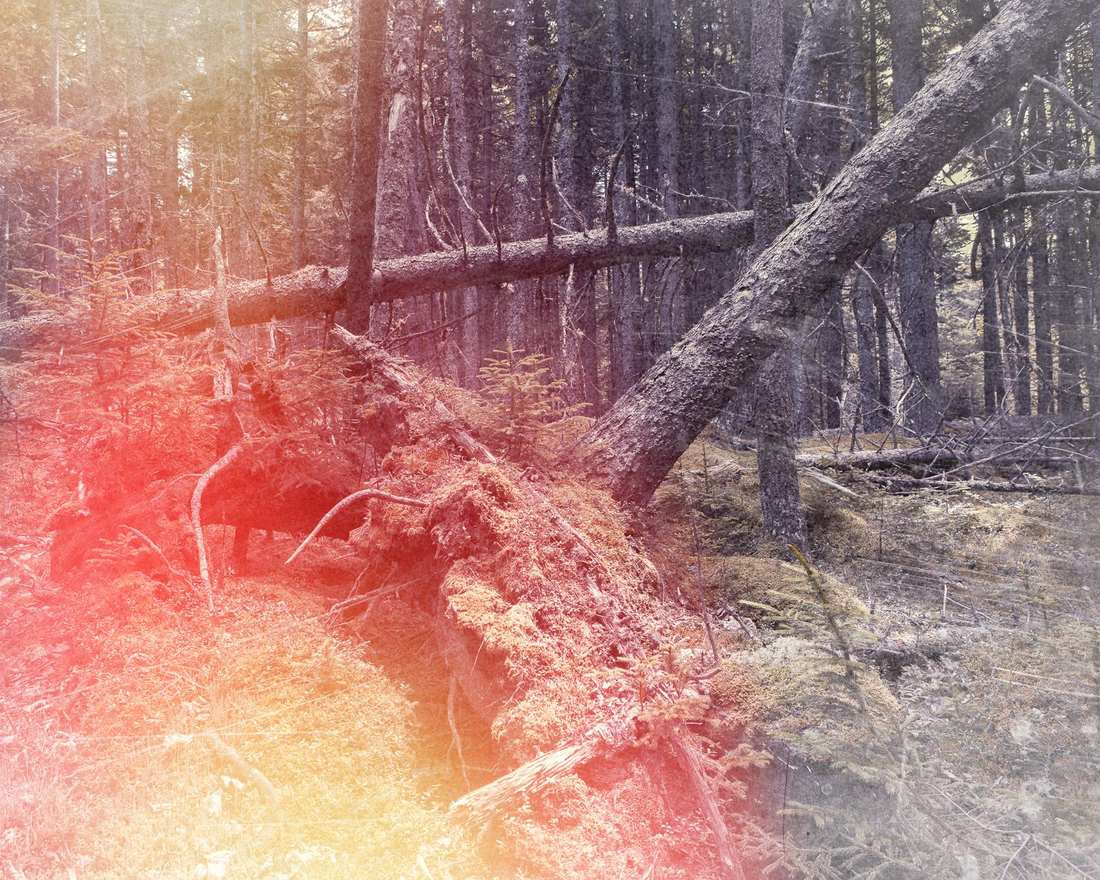
An established form disturbed from within: landscape without vista, clarity or a commanding view, and a different order of what a photograph is technically supposed to achieve.

The picturesque gives the viewer a safe place outside the land. I came to think there is no such place: the camera is caught inside the same density as everything it photographs.

Kin
Squarepusher, Music Is Rotted One Note (Warp, 1998) ◆

Tom Jenkinson set aside sequencers and samplers to play live drums and bass in a broken jazz-fusion style, working under self-imposed limits.

X began while I was listening to this record and asking what a rotted note would look like in landscape photography.

Timothy Morton, Hyperobjects: Philosophy and Ecology after the End of the World (2013) ◆

A hyperobject is a thing so spread out in time and space, like global warming or plastic, that no one can see it whole or stand outside it; Morton says ‘nature’ can no longer be a backdrop to human events.

X came out of this book: photographs with no vista and no outside, where subject and background can no longer be told apart.

Miles Davis, Kind of Blue (1959) ◆

Davis dropped the dense chord changes of bebop and gave each player a set of scales as the frame for improvising, with sketches written only hours before the sessions.

It is a form taken apart and rebuilt under a few rules, the logic behind the rule-based sequencing of X.

also in Photo-poem
Annie Dillard, Pilgrim at Tinker Creek (1974) ◆

A year of close looking along a creek in Virginia’s Roanoke Valley; the chapter “Seeing” describes people given sight after blindness who see only “a dazzle of color-patches,” with no depth and no sense that a near thing can hide a far one.

The photographs in X were made along Virginia rivers, close and without vista, where foreground and background stop sorting themselves out; Dillard describes that kind of seeing, before the eye knows what it is looking at.

David Abram, Becoming Animal: An Earthly Cosmology (2010) ◆

A phenomenology of perception in which the body is part of the land it senses; Abram writes on shadow and on depth, which he says depends on where you stand inside the terrain.

In X the camera does not stand apart from the landscape; I wanted it caught in the same density as everything it photographs, which is Abram’s point about the perceiving body.

Lee Friedlander, The Desert Seen (1996)

Close, tangled photographs of desert plants with no horizon to escape to.

A photobook that stays inside the bramble, as X does along Virginia rivers and Guasábara in Puerto Rico.

“The sequencer is too square, too digital.”

Squarepusher (Tom Jenkinson), Interview with Jason Gross, Perfect Sound Forever, January 1999
2019–

Beside, not under

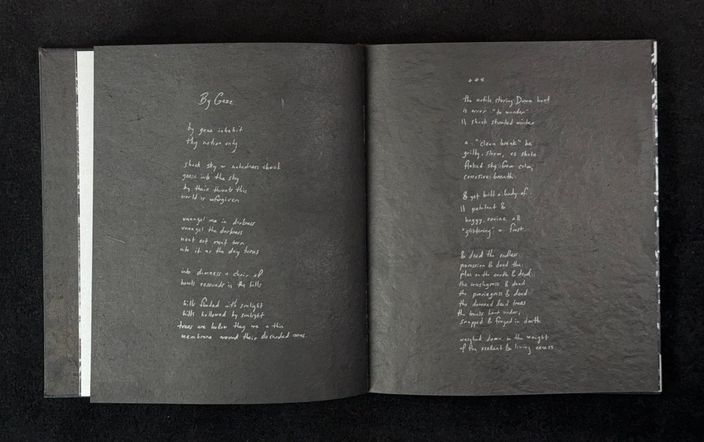
Words set beside the photograph rather than under it: a poet’s afterword, letters in other hands, a poem in silver ink, a poet writing into the sequence.

Writing that explains a picture closes it. Writing beside it keeps it open.

Kin
Cody-Rose Clevidence, Aux Arc / Trypt Ich (2021) ◆

Three lyric sequences set in the Arkansas Ozarks, in a dense, colliding language of body, underbrush and creek; Clevidence’s other books include BEAST FEAST (2014), Flung/Throne (2018) and This Household of Earthly Nature (2025).

Clevidence is my collaborator on X and wrote its poem, By Gaze; their language builds up and stays unresolved rather than explaining, which is why it could sit beside the photographs and not under them.

Roland Barthes, “Rhetoric of the Image” (1964)

Barthes distinguishes text that anchors an image to one meaning from text that relays, adding meaning beside it.

Poem and photograph in X are ‘kin rather than caption’: relay, not anchor.

John Berger and Jean Mohr, Another Way of Telling (1982)

A book on the ambiguity of photographs, including a long sequence Mohr made with no captions.

It argues for keeping a photograph open, which is what writing beside rather than under it does.

Langston Hughes and Roy DeCarava, The Sweet Flypaper of Life (1955)

A poet’s text and a photographer’s pictures running together through one book.

The model for a poet and a photographer on equal footing, as in X and Guasábara.

Trinh T. Minh-ha, Reassemblage (1982)

A film about Senegal in which Trinh says she does not intend to speak about, only to speak nearby.

Writing set beside the photograph, as in X, 100 Yrs and Guasábara, speaks nearby the image rather than explaining it.

“A half-created cinema, an unfinished cinema that attains completion through the creative spirit of the audience.”

Abbas Kiarostami, An Unfinished Cinema, 1995
2013–

At an angle

Images that appear only with the viewer’s movement: silver ink and metallic pages seen as the book tilts, gold that shifts in the light, a pale image that surfaces only when touched.

Looking can be an exchange rather than a delivery: play, wonder and a second look. The viewer takes part in what the image becomes.

Kin
Annie Dillard, Pilgrim at Tinker Creek (1974) ◆

In “Seeing,” Dillard writes of things in nature that appear and vanish as she moves: a fish that flashes, blackbirds that materialize out of a tree and are gone.

The silver pages of X and the gold of Isla de Las Palmas show an image only from certain places, and I wanted the reader to move to find it, as Dillard does along the creek.

The daguerreotype (1839)

The first public photographic process: a mirror-polished silver plate that shows a positive only at the right angle.

X’s silver pages make the reader tilt the book until light catches the image, as a daguerreotype does.

Bruno Munari, Libri illeggibili (Unreadable Books, from 1949)

Books with no words, where cut and colored pages make the turning and handling the content.

X makes the physical encounter with the page part of what the image becomes.

Ulises Carrión, “The New Art of Making Books” (1975)

A manifesto arguing that a book is a sequence of spaces experienced in time, not a container for text.

The reader of X moves through a sequence and around a surface at once.

“Unfortunately, nature is very much a now-you-see-it, now-you-don’t affair.”

Annie Dillard, Pilgrim at Tinker Creek, 1974
2026, in progress

Photo-poem

A rule-based system reads density, darkness, tangle and light in each photograph of X and turns them into motion and sound, with the poem threaded through.

A sequence already moves in time. It could be heard as well as seen.

Kin
Miles Davis, In a Silent Way (1969) ◆

Producer Teo Macero cut one February 1969 session into two long tracks, each repeating its opening section at the end: an album built after the fact from recorded material.

The photo-poem likewise builds a time-based work from finished material by rule, the other half of what I take from Davis rebuilding jazz.

also in Rotted note
Hollis Frampton, Zorns Lemma (1970)

A film ordered by a fixed alphabetic system that gradually replaces letters with images.

A sequence governed by a rule rather than a story, like the photo-poem’s reading of each image.

Norman McLaren, Synchromy (1971)

An animated film whose images are the optical soundtrack itself, so what is seen is what is heard.

The photo-poem turns visual qualities of the photographs into sound in a similar direct way.

Chris Marker, La Jetée (1962)

A film made almost entirely of still photographs with voice-over.

It shows still images set into time, the move the photo-poem makes with X.

“There will be fewer chords but infinite possibilities as to what to do with them.”

Miles Davis, Interview with Nat Hentoff, The Jazz Review, December 1958
2026–

Maleza, and continuation

What cultivation calls scrub, treated as a living order whose power is measured by continuation, not yield. Machines imagined the opposite: the garden ruled by what industry leaves behind.

In Puerto Rico the control of land and of people were joined. What refuses to be owned tells another history.

Kin
Leo Marx, The Machine in the Garden (1964) ◆

A study of the American pastoral ideal and the technology that keeps interrupting it, often as a train whistle in a quiet landscape.

Machines pushed Marx’s middle landscape into a future ruled by industry; Guasábara looks for what in the land will not submit to any plan.

Timothy Morton, Dark Ecology: For a Logic of Future Coexistence (2016) ◆

Morton traces the ecological crisis to what he calls agrilogistics, the logic of agriculture since the Fertile Crescent, which treats the field as a fixed substance and shuts out other lifeforms as “pests” or “weeds.”

Guasábara starts from the name maleza, what cultivation calls weeds, and X stays in the growth that exceeds the systems put on it; Morton, whose Hyperobjects is behind X, gives that name its long history.

also in Rotted note
Charles C. Mann, 1491: New Revelations of the Americas Before Columbus (2005) ◆

Mann argues that many landscapes Europeans took for untouched wilderness had been shaped by Native peoples and emptied by epidemic, so that “wilderness” was partly a misreading.

In X and Guasábara I treat wildness not as untouched wilderness but as a condition that exceeds the systems put on it; Mann shows how the idea of pristine land itself was a colonial reading of places people had long shaped.

Sylvia Wynter, “Novel and History, Plot and Plantation” (1971)

Wynter contrasts the plantation, grown for market, with the enslaved people’s provision plot, where another relation to land and culture survived.

Guasábara’s maleza, the growth that refuses cultivation, stands where Wynter’s plot stands against the plantation.

Malcom Ferdinand, Decolonial Ecology: Thinking from the Caribbean World (2019; English 2022)

Ferdinand argues that environmental damage and colonial slavery in the Caribbean share one root: the plantation’s way of inhabiting the earth.

Guasábara’s claim that ‘agricultural and colonial systems joined the control of land to the control of people.’

Gilles Clément, Manifeste du Tiers paysage (2004)

A gardener’s manifesto for the ‘third landscape’: neglected, unmanaged ground as a refuge for diversity.

It values the scrub and edges that cultivation writes off, the ground X and Guasábara photograph.

Anna Lowenhaupt Tsing, The Mushroom at the End of the World: On the Possibility of Life in Capitalist Ruins (2015)

Tsing follows the matsutake mushroom through disturbed forests to show how life continues in places that industry and plantation have used up.

Guasábara measures the land's power by continuation, not yield, and Tsing gives that idea a ground: life in the ruins of plantation, growing where cultivation called the land waste.

Álvar Núñez Cabeza de Vaca, La Relación (1542) ◆

A Spanish officer shipwrecked in 1528 spends eight years crossing the continent among Native peoples as captive, trader and healer, and writes the account for the Crown.

It taught me a great deal about Indigenous perspectives and spirituality in the Americas, and what the land looks like from inside those lives rather than from a colonial plan. Guasábara begins from a word of Indigenous Antillean origin.

Charles C. Mann, 1493: Uncovering the New World Columbus Created (2011) ◆

A history of the Columbian Exchange: the plants, animals, microbes and people moved across oceans after 1492, and the plantation ecologies they built.

Guasábara looks at land in Puerto Rico where agricultural and colonial systems joined; Mann shows that the ecosystems themselves were remade by that joining.

Charles C. Mann, The Wizard and the Prophet (2018) ◆

Two twentieth-century ideas of nature set side by side: Norman Borlaug’s, that technology can raise yield without limit, and William Vogt’s, that the earth has limits we must live within.

Enormous for how I think about ecosystems. Guasábara measures the land by what continues rather than by what it yields, a question Mann traces to this split.

Merlin Sheldrake, Entangled Life (2020) ◆

A study of fungi and the networks through which they connect, feed and change the living things around them, often out of sight.

It changed how I see a landscape as connection rather than a set of separate things, and it fed directly into Guasábara and X.

“The sudden appearance of the machine in the garden is an arresting, endlessly evocative image.”

Leo Marx, The Machine in the Garden, 1964
2006–

Sequence as structure

The order of pictures as the argument. What matters is which picture sits beside which, at what size, with what gap, and what the page turn does. A sequence can use light, place or feeling as its spine and set very different material side by side. I treat the book as a structure, not an album.

Every book I have made is built this way: Pine Tree Ballads, the Isla de Las Palmas books, 100 Yrs, X, Sol y Sombra and Guasábara each find their own logic of order. I also teach it, in a course called Experiments in Sequencing.

Kin
Nathan Lyons, Notations in Passing (1974) ◆

A book of Lyons’s photographs of the American street, its signs, windows and surfaces, printed without captions so that each picture is read against the ones around it.

Where I learned that a sequence can think: the meaning is made between the pictures, not inside any one of them.

Keith A. Smith, Structure of the Visual Book (1984) ◆

A book artist’s study of the book as a physical sequence in time: the page turn, the spread, pacing, and the gutter as part of the composition.

A book is read in time and the turn of a page is an edit. That is how Pine Tree Ballads, the Isla de Las Palmas books and X are built.

Martin Parr and Gerry Badger, The Photobook: A History, vols. I–III (2004, 2006, 2014) ◆

A three-volume survey that treats the photobook as a form of its own, arguing that a good one should be “an extended essay in photographs.”

All three volumes were a big deal for me. I open my sequencing lectures with that line: extended means the meaning unfolds across pages, essay means the book is thinking, and the order is its syntax.

Lev Kuleshov, montage experiments (around 1918–1921) ◆

The Soviet filmmaker cut the same shot of an actor’s face against different images and audiences read a different feeling in it each time.

Same image, different neighbors, different meaning. Nothing in the photograph changes; everything changes in the sequence. It is the basis of the spread and the page turn.

Rinko Kawauchi, Illuminance (2011) ◆

A photobook of small everyday events, light and living things that returns to its motifs again and again rather than building to a climax.

A book of huge significance for me and, to my mind, a masterpiece of sequencing. I read the eclipse in it as the image that holds the whole book: light is the real subject, and the book cycles instead of arriving.

Walter Benjamin, The Arcades Project (written 1927–1940; English 1999) ◆

An unfinished work on nineteenth-century Paris made largely of quotations and notes, sorted into files he called convolutes, so that fragments speak by being placed together.

Hannah Arendt described his ideal as a work made entirely of quotations. My books work close to that: found material and my own set side by side until the arrangement says what no caption could.

Annie Dillard, Mornings Like This: Found Poems (1995) ◆

Poems built entirely from sentences taken out of other books, old manuals, letters and histories, cut and rearranged into new forms.

Nothing added but order, and the order becomes the author. It is the same act as working with the family and island archives.

Marguerite Duras, “Words don’t explain images. They disturb them.” ◆

A line attributed to the novelist and filmmaker, who often set a spoken text against images that did not illustrate it. It reached me through a teaching handout, What Happens Between Photographs.

It is the rule for text in my books: the writing beside the picture unsettles it rather than explaining it.

Lynne Ramsay, Ratcatcher (1999) ◆

It opens on a boy slowly wrapping himself in a lace curtain, a moment of pure lyric play, until his mother slaps him out of it.

Rupture: the break in an established pattern that makes you reread what came before. Beauty runs straight into the material world, and the break has consequences.

also in Enacted lore
Terrence Malick, The Tree of Life (2011) ◆

Brief images of light through trees, moving water and the cosmos appear between the scenes of a 1950s family.

They do not advance the story; they change its scale. It is the clearest example I know of the bridge, an image whose job is to carry the sequence somewhere larger.

Alfonso Cuarón, Roma (2018) ◆

Wide shots of the family’s courtyard return throughout the film, after each upheaval.

An anchor image: it orients the viewer and steadies the structure, so that the returns themselves carry the film’s emotional movement.

Kelly Reichardt, Certain Women (2016) ◆

Three stories of women in small-town Montana set side by side, touching only at their edges. In the last, a ranch hand alone with her winter chores drives into town for a night class and falls quietly for the young lawyer who teaches it.

The silence is phenomenal, and the structure does the talking: three stories placed next to each other, never explained, so meaning comes from what sits beside what.

“Benjamin’s ideal of producing a work consisting entirely of quotations, one that was mounted so masterfully that it could dispense with any accompanying text”

Hannah Arendt, introduction to Walter Benjamin’s Illuminations, 1968
2006–

Long-form thinking

Meaning built across distance. A motif returns weighted by what came between, a gap does the telling, repetition shifts until it becomes a condition, and the ending rereads the beginning. The question is what only becomes clear after thirty pages.

Sol y Sombra and X are built on returns, withheld events and endings that send you back to the opening. I learned this as much from film, dance, music and the novel as from photobooks, and I teach it that way.

Kin
Terrence Malick, Days of Heaven (1978), The New World (2005) and The Tree of Life (2011) ◆

Films in which human drama and the natural world are cut together as one fabric, carried by whispered voice-over, and in which time loosens: in The Tree of Life a grown man’s present, his 1950s childhood and the origin of the universe flow into one another through memory.

An enormous influence on how Pine Tree Ballads was sequenced. Timelines run concentrically and blend through memory, so you cannot tell what is present and what is past, and the sequence expands time rather than marking it.

Steve Reich, Clapping Music (1972) ◆

Two performers clap the same pattern; one shifts it by a single beat, again and again, until the two lines come back together.

Modulation in its simplest form: the material never changes, the structure does, and so does what you hear.

Anne Teresa De Keersmaeker, Rosas danst Rosas (1983) and Rain (2001) ◆

Choreography built from repeated gestures under small shifts of tempo; in Rain, dancers pass energy across the stage to Reich’s Music for 18 Musicians so no one body holds the center for long.

Some movements are not there to be noticed on their own but to keep the whole piece alive. That is the work bridge images do in a book.

Pina Bausch, Kontakthof (1978) ◆

A piece of courtship rituals performed in a dance hall, later restaged with performers over 65 and again with teenagers.

The same gestures return in older bodies and no longer mean the same thing. Return is repetition altered by what has been lived in between.

Jérôme Bel, The Show Must Go On (2001) ◆

Pop songs play one after another while the performers sometimes dance, sometimes stand still, and sometimes leave the stage empty.

Ellipsis in dance: the expected action is withheld and the waiting becomes the experience. A sequence does not always have to give the picture the viewer expects.

Annie Dillard, For the Time Being (1999) ◆

Seven chapters, each cut into the same ten recurring sections: birth, sand, China, clouds, numbers, Israel, encounters, a thinker, evil and now. The subjects seem unrelated until, by accumulation, they become one meditation.

A book I love for its structure. Nothing is argued directly; the same few subjects return chapter after chapter until they add up, which is how I want recurring pictures to work.

Yasujirō Ozu, Late Spring (1949) ◆

At the emotional peak of the film, when the daughter has agreed to marry and leave her father, Ozu cuts away to a vase in a darkened room and holds it.

The central moment is missing and you feel it anyway. The vase absorbs what we are not shown, which is how a withheld picture works in Sol y Sombra.

Andrei Tarkovsky, Mirror (1975) ◆

A film that moves by memory rather than plot: a house, a field, a mother’s face, and wind through grass return across time, color and black and white.

The image comes back but does not mean the same thing, altered by everything in between. Early scenes stay unclear until they are echoed later.

Abbas Kiarostami, Taste of Cherry (1997) ◆

A man drives the hills outside Tehran asking one stranger after another the same question, in the same framing, at the same pace.

Nothing new is added and the weight accumulates: curiosity, then frustration, then moral confrontation. The question stays the same while the answers unsettle you.

Abbas Kiarostami, The Wind Will Carry Us (1999) ◆

A Tehran crew waits in a Kurdish village for an old woman to die. The same drive up the hill to catch a phone signal repeats again and again, until a doctor on a motorbike talks about this world against the promised next one.

The repetitions irritated me at first. Then the doctor’s ride reorganized everything I had seen, and the film taught me that a return can change the meaning of all that came before it.

Wong Kar-wai, In the Mood for Love (2000) ◆

The same stairway, noodle stall, rain and waltz theme return again and again with small changes in distance, timing and posture.

Repetition as feeling. Each return carries a different pressure, which is how recurring pictures work across Sol y Sombra and X.

Barry Jenkins, Moonlight (2016) ◆

One life told in three chapters, with the formative years between them left out.

Identity built from gaps: the viewer completes what the cuts skip, the way a book can leave out the middle of a before and after.

Kurt Vonnegut, Slaughterhouse-Five (1969) ◆

Billy Pilgrim comes “unstuck in time,” so the novel moves among Dresden, his married life and an alien zoo, with the firebombing at the center it keeps circling.

It changed how I think a story can be told: out of order, circling the event it cannot show directly.

also in Doculiterary
Margaret Atwood, novels ◆

Fiction that often arrives as a reconstructed record, a voice pieced together and framed by whoever assembles it after the fact.

Narrative as something built and framed, where the order and the frame decide what we believe.

Roberto Bolaño, 2666 (2004; English 2008) ◆

A novel in five parts circling the murders of women in a border city modeled on Ciudad Juárez. The fourth part records the killings one after another in the flat language of police and forensic reports.

It showed me that literature can be conceptual. The weight is carried by the structure itself, report after report, and by the refusal to look away, not by any single scene.

Lee Chang-dong, Burning (2018) ◆

A man says he burns abandoned greenhouses; the young woman between him and the narrator disappears; no greenhouse is ever seen burning and nothing is explained.

Ambiguity with delayed pressure. The event at the center is never shown, and scenes that seemed ordinary grow heavier in memory afterward.

Lucrecia Martel, La mujer sin cabeza (The Headless Woman, 2008) ◆

A woman driving on a country road in Salta hits something, a dog or perhaps a boy, and does not look back. The rest of the film lives in the aftermath, while her family and class quietly close around her and the evidence disappears.

The event at the center is withheld and never confirmed. The silence and the half-seen edges of the frame carry the weight, and the not-knowing becomes the subject.

Carlos Reygadas, Silent Light (2007) ◆

The film opens with one unbroken shot of dawn coming up over a Mennonite farm in Chihuahua and closes with its mirror, a nightfall.

A beginning that teaches you how to look and an ending that rereads it. The opening sets the moral and spiritual temperature of a world before anyone speaks.

Carlos Reygadas, Post Tenebras Lux (2012) ◆

A family’s life in the Mexican countryside told out of order: scenes jump ahead to the children grown, into dreams, and once to a rugby match in England, with no signal of where we are in time. Much of it is shot through a lens that blurs and doubles the edges of the frame.

The structure trusts the viewer to hold memory, dream and future at once and to find the connections without being told. It is one of the films that changed how I think a sequence can move.

“The dominant, all-powerful factor of the film image is rhythm, expressing the course of time within the frame.”

Andrei Tarkovsky, Sculpting in Time, 1986
Shared kin
Thinkers and works that run through more than one term.
Annie Dillard

Seeing as work done by a body moving through a Virginia creek, where things appear only from where you stand.

Terrence Malick

Human drama and nature as one fabric, with time expanded and blended through memory.

Lynne Ramsay

Lyric beauty running into a hard, real world, with the marvelous inside it.

Kurt Vonnegut

Fact and invention held in one telling.

Edward Said

Who gets to describe whom, and the double vision of living between two places.

Sally Mann

Photographs that carry their own damage and time, and that end up standing in for the memories they seem to hold.

Timothy Morton

Nature as a frame that keeps us at a distance; the mesh, with no outside to stand in.

Werner Herzog

A truth reached through staging and invention rather than surface fact.

Walter Benjamin

History read against the grain; aura as a weave of space and time; the story passed from mouth to mouth.

Mario Vargas Llosa

The storyteller as the one who keeps a people’s memory alive by telling it again.

Eduardo Lalo

Puerto Rico as a place made invisible by the centers that describe it, answered from inside.

Michel Foucault

Institutions, from the archive to the school, that decide what can be said and shape who we become.

W. G. Sebald

Prose and uncaptioned photographs in which fact and invention cannot be pulled apart.

Roland Barthes

The photograph as a trace touched by time; words that sit beside an image rather than fix it.

Édouard Glissant

The right not to be made transparent, and thought that moves between islands with no center.

Miles Davis

A form taken apart and rebuilt under a few rules, then cut together after the fact.

Hughes and DeCarava

A poet and a photographer sharing one book as equals.

Through-lines
What changes across the whole body of work, seen and read.

From the staged room to the tangle

Costumed tableaux and montaged vistas give way to found objects, then to night woods, then to no horizon at all. By X and Guasábara there is nowhere outside the picture to stand.

The surface grows physical

Glossy inkjet; cracked glass and tin; film leaks kept in; salt and scent; newsprint, gold and tarps; handwriting on rag paper; silver that appears only as the page tilts.

Flash, the long thread

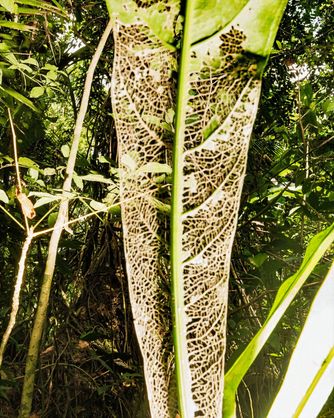
Studio strobe for satire; night flash on enacted figures in Pine Tree Ballads; then the whole method, black and white in X and color in Guasábara, turning vines and trunks into pale apparitions.

The mystical: mask, place, word

Acted out by masked figures (2000, 2006, 2019); found in ritual and landscape (Isla); carried by light and the object (X); spoken in handwriting beside the image (Sol y Sombra).

Writing moves toward the picture

Typed accession records that pretend to know; no captions at all; thirteen other hands; a poem in silver facing the image; my own suturas stitched beneath it.

Who speaks

A single ironic voice becomes a family chorus, then a listener, then thirteen writers in their own hand, then a photographer working beside poets, then my own hand again.

The record, in detail
Read down a column to see one thing change over time.
Place
Material
Light
Distance
Staging
The uncanny
Beside the image
Myth / truth
Kind of knowledge
Collaboration
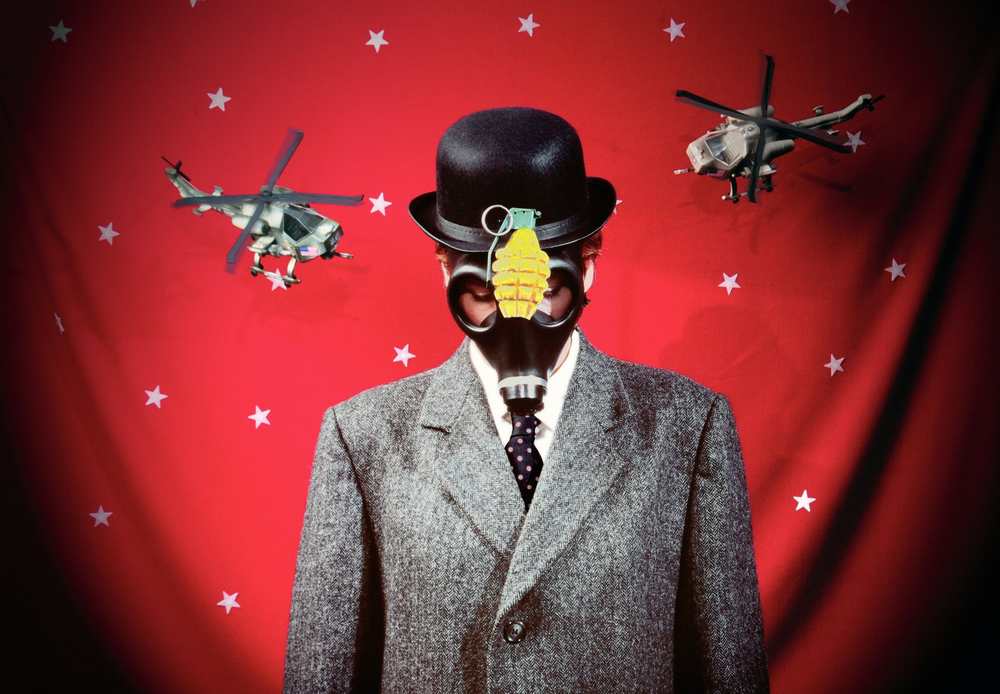
2000From Oz to Eden
United States history, as spectacle
Digitally montaged color inkjet prints
Studio flash, saturated primaries
Room-scale tableau
Fully staged, costumed
Masks as satire
Borrowed political-cartoon logic
Irony: the national myth as entertainment
Satirical. History known as spectacle, and seen through
Solo
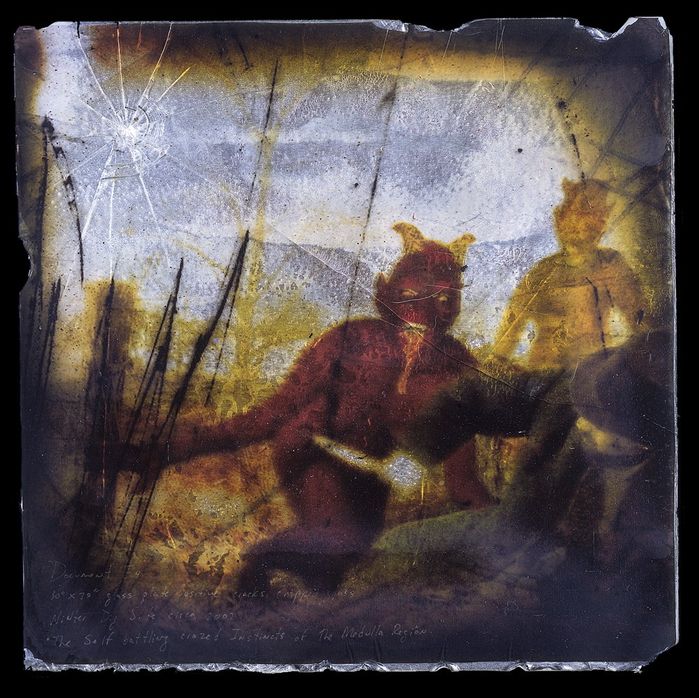
2006Dissolving Boundaries of the Self
Suburban South; Catholic military school
Glass and tin plates, scratched, corroded, cracked, rephotographed
A murky glow through damaged emulsion
Figures in a field, behind glass
Staged, then aged into evidence
Masked, animal-headed figures on relics
Accession records, measurements, mythologies and psychoanalytic readings, each by a different author
Myth made material; object, institution, myth and psyche as separate histories
Layered. One object, several histories, each written for a different audience
Solo
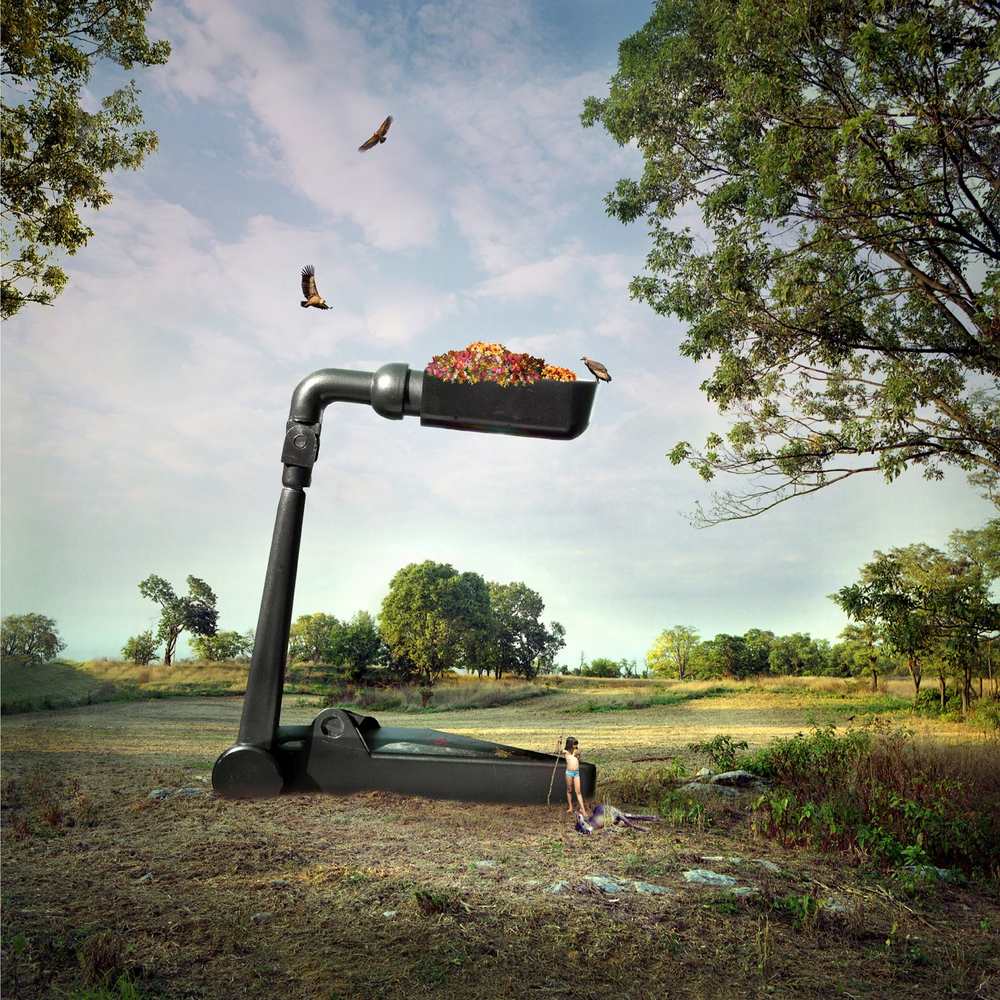
2010Machines
The American landscape
Montage, color and black and white, of landscape with thrift-store items and machine parts
Composited skies, storm and moonlight
Wide vista, the object as monument
Constructed by montage
Machine idols
Statement only
Leo Marx’s machine in the garden, pushed into the future
Speculative. A future inferred from present waste
Solo
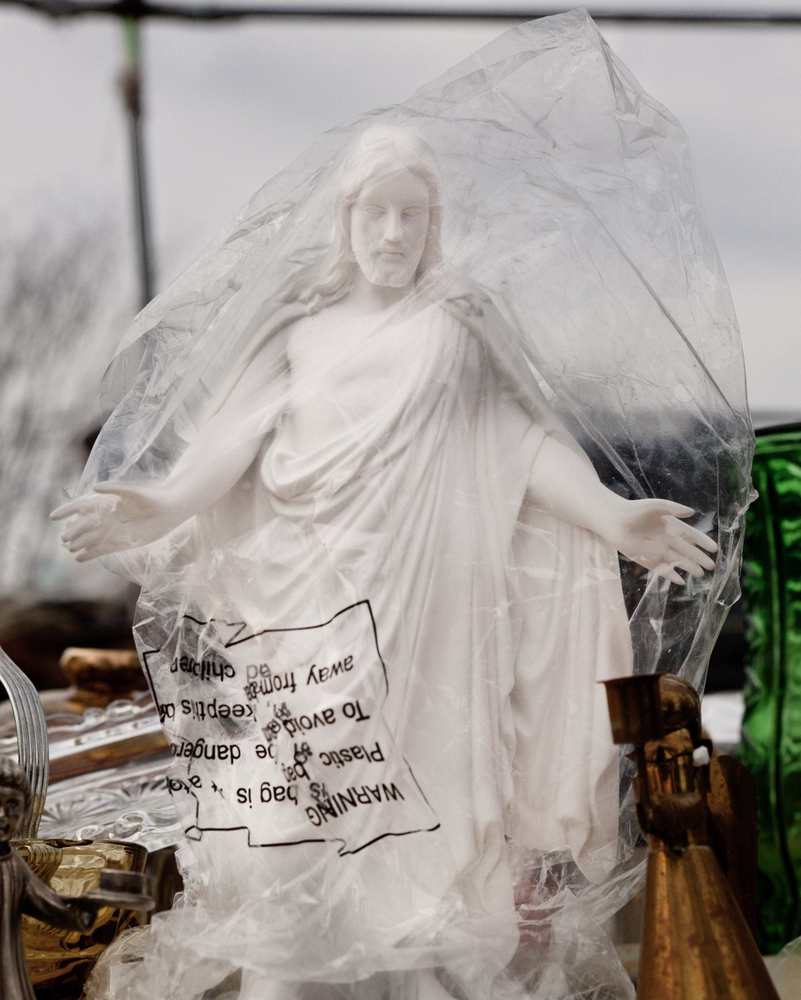
2012Flea Jesus
Flea market, Harpers Ferry
Color photographs of religious kitsch, made over five years
Harsh market daylight
Close still life
Found, unarranged
A veiled Christ
A statement that admits a change of mind
Belief against the observer’s bias; objects that were held, used and gave comfort
Humbled. Pictures that overturn the photographer’s own bias
Solo, among the vendors and their tables
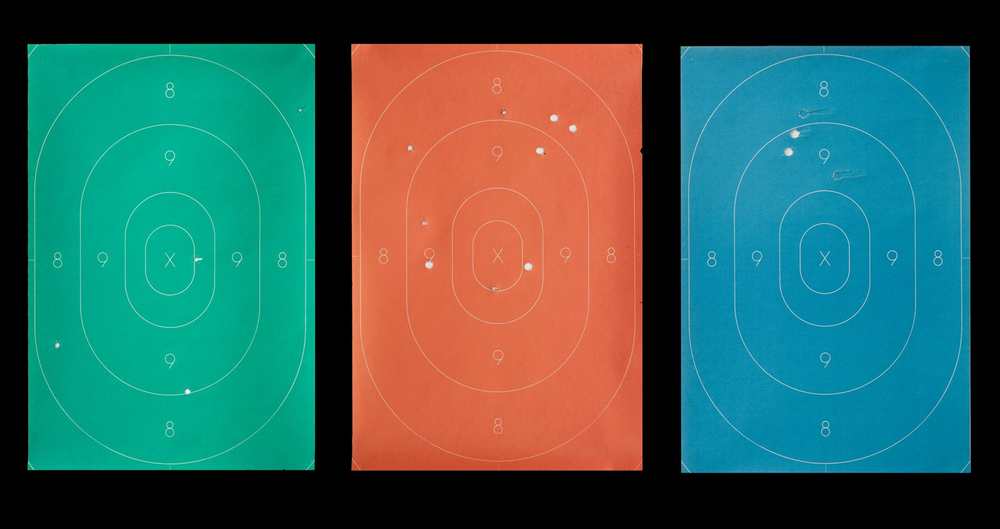
2013Limelight Firefight
YouTube, Flickr, the toy aisle
Appropriated video and snapshots; toys shot as artifacts; spent paper targets
Product light against camcorder daylight
Clinical close-up; home-video middle distance
Appropriated; targets set in an Ellsworth Kelly-like order
Rites of childhood
The family video’s own “decisive moments”
Roles taught through play: to be seen or to fight, to be desired or to act out violence
Forensic. Toys, shoes and spent targets as a record of how a child is steered
Unknown families online, through what they posted
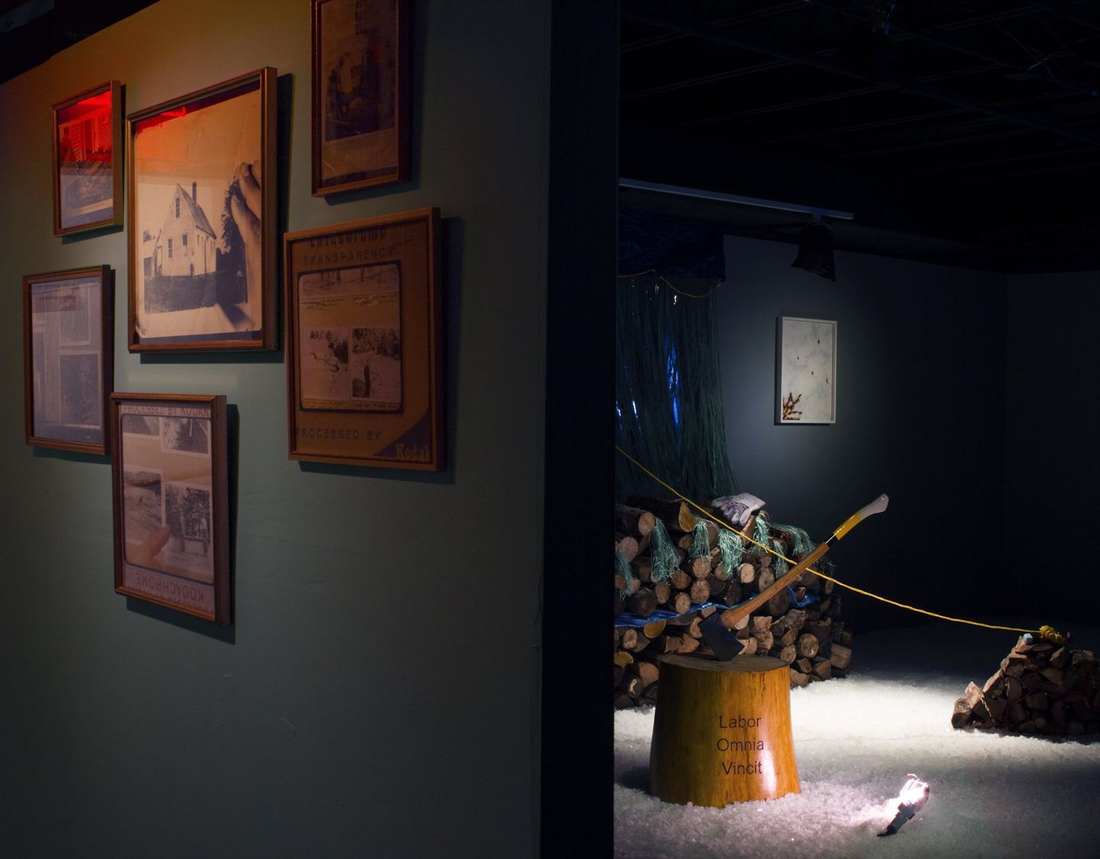
2013PTB Labor Omnia Vincit
Maine, rebuilt in a gallery
Shed, 3,400 lb of salt, a woodpile, gold-framed family photographs, pepper scent, video
Spotlights in a dark room
Bodily: the viewer inside
Built as a walk-through set
The room as a mystical workplace
Title as motto: work conquers all
Generational labor as inheritance
Embodied. The archive known through smell, weight and salt underfoot
Solo
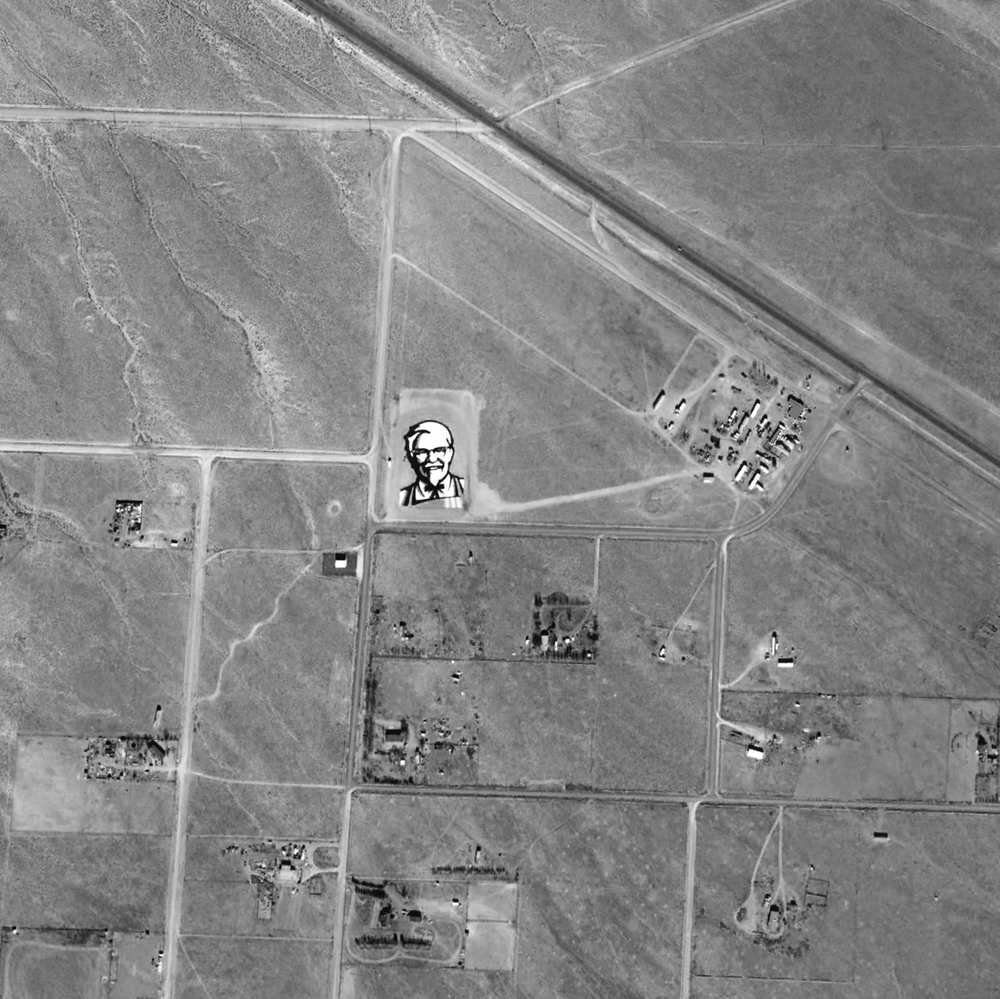
2014PYADE
Sky, street and satellite; real and virtual
Photographs made on foot; airplane banners over the Indy 500; Google Street View and Google Earth captures; a text poster
Flat daylight, blank sky
Satellite to sidewalk
Found and appropriated
Air-dancer idols
Slogans; the logo as landscape
Commerce as the new ground
Critical. Seeing what has already been bought
Solo
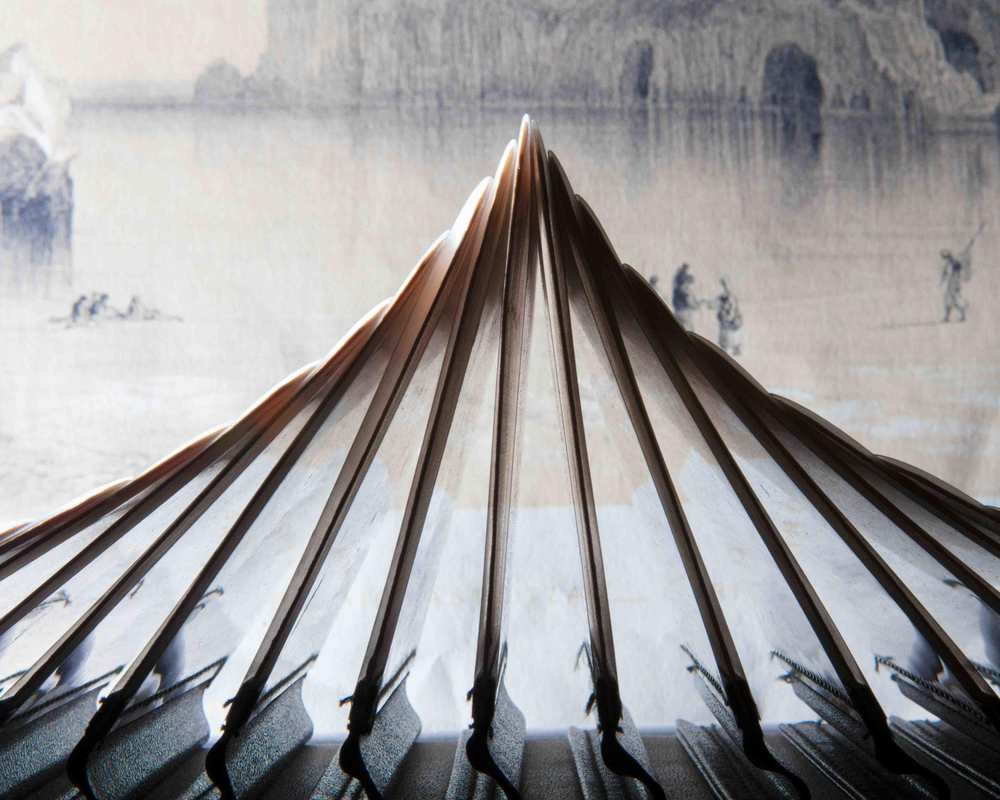
2016Bibliophilia
Libraries and physical archives
Color and black-and-white photographs made in working libraries
Window light, blur, hard contrast
Very close, near abstract
Found, framed as form
Almost none: busts behind glass
None needed
The brick-and-mortar archive, worth keeping
Formal. Knowledge housed, shelved and ordered, read as form
Solo, inside working libraries
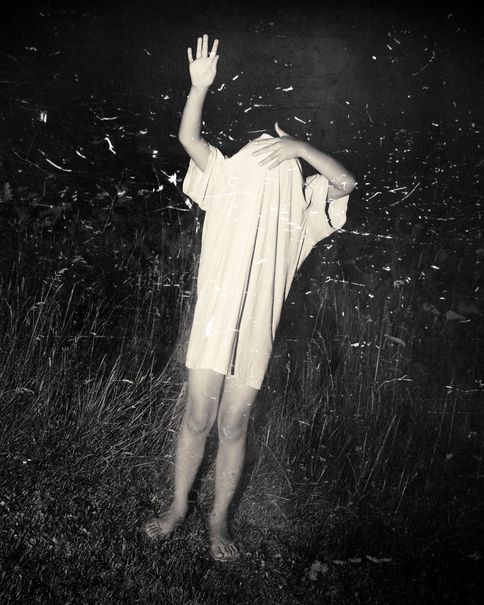
2019Pine Tree Ballads
Gray’s Point, Deer Isle, Maine
Color and black and white, over ten years, on digital, 35mm, 4×5 and a Vest Pocket Kodak; monograph
Night flash, light leaks, film burns
Close to middle; faces in the dark
Enacted by family, among found scenes
Enacted lore at night
Family lore, my writing, an afterword by a poet
Fact and folklore held in one telling; aura admitted as part of photographic truth
Doculiterary. Meaning built through sequence, metaphor and recurrence
Family and its lore; Candela Books; the poet Dora Malech
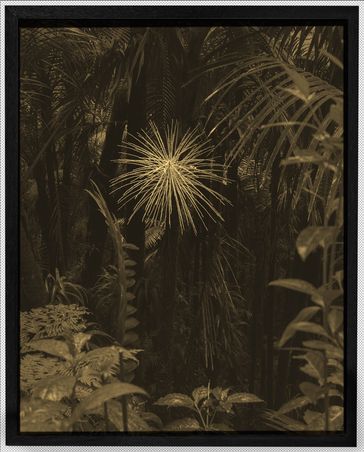
2021Isla de Las Palmas
Puerto Rico, after return
Newsprint book; a Riso Collector’s Edition; gold-toned prints and silks; tarps; field recordings
Tropical daylight, gold toning
Document in hand to hillside
Encountered; some enacted ritual
Ritual in gold light
Deliberately none. The voices shape the pictures but stay off the page
The history I was handed, tested against what I heard
Listened. Fieldwork that changed the knowledge I was given; opaque on the page
The people I interviewed; bookmaker Rory Sparks
2023Isla de Las Palmas: 100 Yrs
The island and the diaspora
Riso boxes; archival prints; handwritten letters on rag paper
Street daylight, stage light
Arm’s length, as a reader
Given to others to answer
In the handwriting
Thirteen voices in their own hand
Wisdom addressed a hundred years ahead
Shared. Authorship handed to thirteen others and sent a century forward
Thirteen Puerto Rican writers; Rory Sparks. The collaborative work begins here
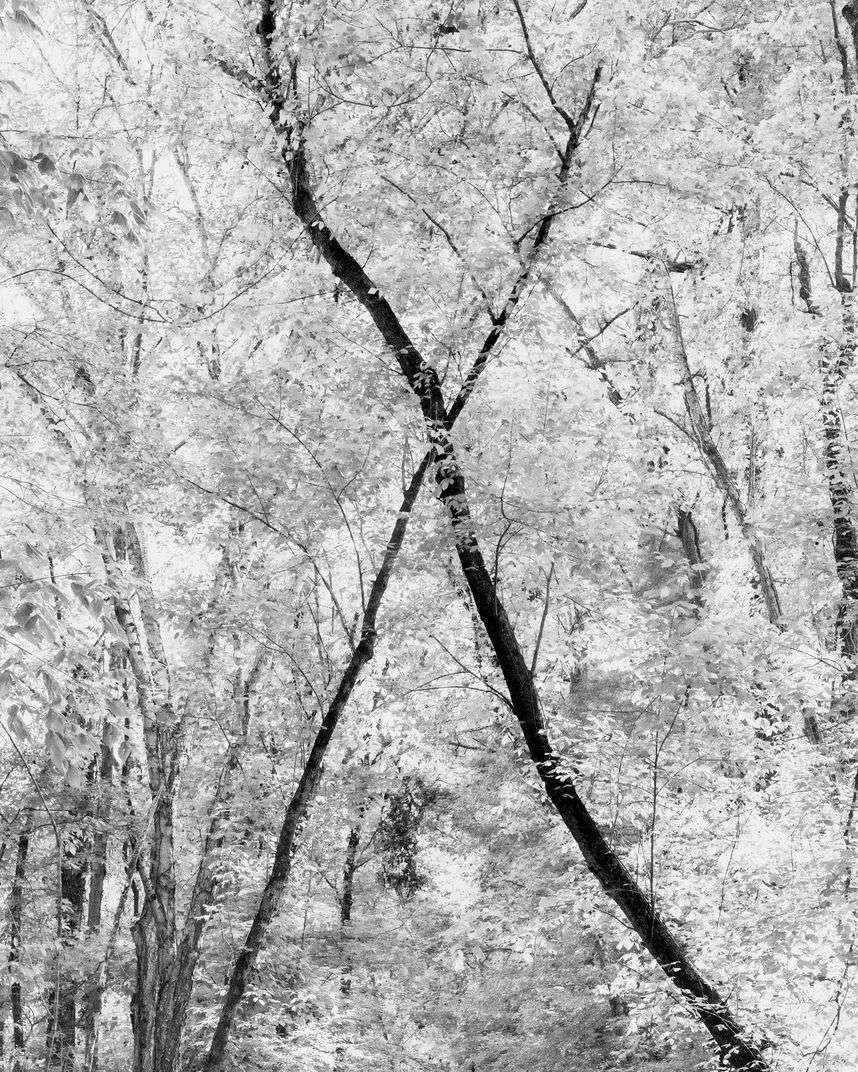
2026X
The river landscapes of Virginia, known since childhood
Black-and-white photographs in a section-sewn book; nine poem plates in silver ink; metallic and handmade papers; a moving-image and sound work
Flash, answered by silver
Inside the tangle; no horizon
Found, ordered by rule
In the flash and the silver
By Gaze by Cody-Rose Clevidence: poem and photograph as kin, neither explaining the other
Against the picturesque and its agricultural logic of useful and useless
Reciprocal. An image that appears only at an angle, as you move
Poet Cody-Rose Clevidence; book artist Rory Sparks
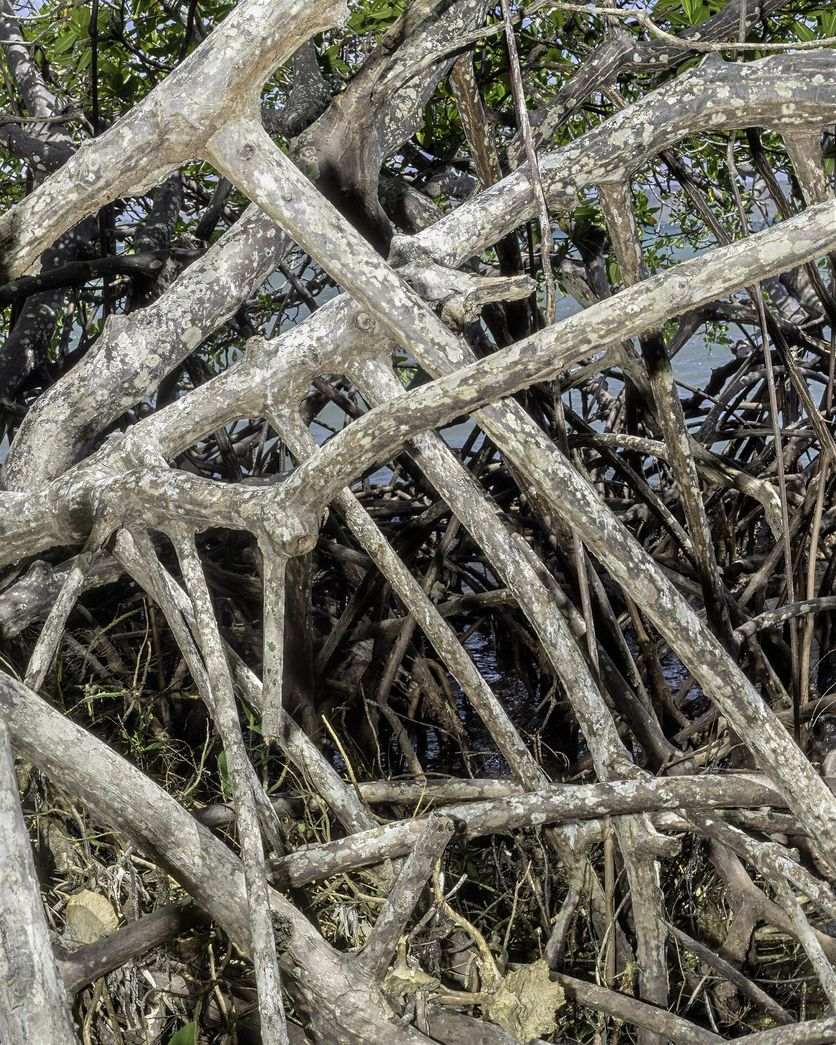
2027Guasábara
Puerto Rico, in the maleza where cultivation stops
Color photographs, made with flash; an artist book in development
Flash in color, night and day
Inside the tangle; some sky
Found, inside the maleza
In the name, and the flash
Rubén Ramos Colón writing into the sequence
Extraction and refusal present as pressure, not illustration
Illegible order. Currents and returns perceptible without becoming fully legible
Poet Rubén Ramos Colón
2028Sol y Sombra
Santurce, and my mother’s family
Family snapshots and new color photographs; handwritten suturas; prose
Faded sun, flare, old prints
Street level; the family table
Encountered, and the family archive
In the suturas
Suturas: writing stitched under the image
The family story, and what the photographs leave out
Sutured. Document and doubt stitched together, the seams left visible
Family, and the family archive

The record, in detail
2000

From Oz to Eden

Place
United States history, as spectacle
Material
Digitally montaged color inkjet prints
Light
Studio flash, saturated primaries
Distance
Room-scale tableau
Staging
Fully staged, costumed
The uncanny
Masks as satire
Beside the image
Borrowed political-cartoon logic
Myth / truth
Irony: the national myth as entertainment
Kind of knowledge
Satirical. History known as spectacle, and seen through
Collaboration
Solo
2006

Dissolving Boundaries of the Self

Place
Suburban South; Catholic military school
Material
Glass and tin plates, scratched, corroded, cracked, rephotographed
Light
A murky glow through damaged emulsion
Distance
Figures in a field, behind glass
Staging
Staged, then aged into evidence
The uncanny
Masked, animal-headed figures on relics
Beside the image
Accession records, measurements, mythologies and psychoanalytic readings, each by a different author
Myth / truth
Myth made material; object, institution, myth and psyche as separate histories
Kind of knowledge
Layered. One object, several histories, each written for a different audience
Collaboration
Solo
2010

Machines

Place
The American landscape
Material
Montage, color and black and white, of landscape with thrift-store items and machine parts
Light
Composited skies, storm and moonlight
Distance
Wide vista, the object as monument
Staging
Constructed by montage
The uncanny
Machine idols
Beside the image
Statement only
Myth / truth
Leo Marx’s machine in the garden, pushed into the future
Kind of knowledge
Speculative. A future inferred from present waste
Collaboration
Solo
2012

Flea Jesus

Place
Flea market, Harpers Ferry
Material
Color photographs of religious kitsch, made over five years
Light
Harsh market daylight
Distance
Close still life
Staging
Found, unarranged
The uncanny
A veiled Christ
Beside the image
A statement that admits a change of mind
Myth / truth
Belief against the observer’s bias; objects that were held, used and gave comfort
Kind of knowledge
Humbled. Pictures that overturn the photographer’s own bias
Collaboration
Solo, among the vendors and their tables
2013

Limelight Firefight

Place
YouTube, Flickr, the toy aisle
Material
Appropriated video and snapshots; toys shot as artifacts; spent paper targets
Light
Product light against camcorder daylight
Distance
Clinical close-up; home-video middle distance
Staging
Appropriated; targets set in an Ellsworth Kelly-like order
The uncanny
Rites of childhood
Beside the image
The family video’s own “decisive moments”
Myth / truth
Roles taught through play: to be seen or to fight, to be desired or to act out violence
Kind of knowledge
Forensic. Toys, shoes and spent targets as a record of how a child is steered
Collaboration
Unknown families online, through what they posted
2013

PTB Labor Omnia Vincit

Place
Maine, rebuilt in a gallery
Material
Shed, 3,400 lb of salt, a woodpile, gold-framed family photographs, pepper scent, video
Light
Spotlights in a dark room
Distance
Bodily: the viewer inside
Staging
Built as a walk-through set
The uncanny
The room as a mystical workplace
Beside the image
Title as motto: work conquers all
Myth / truth
Generational labor as inheritance
Kind of knowledge
Embodied. The archive known through smell, weight and salt underfoot
Collaboration
Solo
2014

PYADE

Place
Sky, street and satellite; real and virtual
Material
Photographs made on foot; airplane banners over the Indy 500; Google Street View and Google Earth captures; a text poster
Light
Flat daylight, blank sky
Distance
Satellite to sidewalk
Staging
Found and appropriated
The uncanny
Air-dancer idols
Beside the image
Slogans; the logo as landscape
Myth / truth
Commerce as the new ground
Kind of knowledge
Critical. Seeing what has already been bought
Collaboration
Solo
2016

Bibliophilia

Place
Libraries and physical archives
Material
Color and black-and-white photographs made in working libraries
Light
Window light, blur, hard contrast
Distance
Very close, near abstract
Staging
Found, framed as form
The uncanny
Almost none: busts behind glass
Beside the image
None needed
Myth / truth
The brick-and-mortar archive, worth keeping
Kind of knowledge
Formal. Knowledge housed, shelved and ordered, read as form
Collaboration
Solo, inside working libraries
2019

Pine Tree Ballads

Place
Gray’s Point, Deer Isle, Maine
Material
Color and black and white, over ten years, on digital, 35mm, 4×5 and a Vest Pocket Kodak; monograph
Light
Night flash, light leaks, film burns
Distance
Close to middle; faces in the dark
Staging
Enacted by family, among found scenes
The uncanny
Enacted lore at night
Beside the image
Family lore, my writing, an afterword by a poet
Myth / truth
Fact and folklore held in one telling; aura admitted as part of photographic truth
Kind of knowledge
Doculiterary. Meaning built through sequence, metaphor and recurrence
Collaboration
Family and its lore; Candela Books; the poet Dora Malech
2021

Isla de Las Palmas

Place
Puerto Rico, after return
Material
Newsprint book; a Riso Collector’s Edition; gold-toned prints and silks; tarps; field recordings
Light
Tropical daylight, gold toning
Distance
Document in hand to hillside
Staging
Encountered; some enacted ritual
The uncanny
Ritual in gold light
Beside the image
Deliberately none. The voices shape the pictures but stay off the page
Myth / truth
The history I was handed, tested against what I heard
Kind of knowledge
Listened. Fieldwork that changed the knowledge I was given; opaque on the page
Collaboration
The people I interviewed; bookmaker Rory Sparks
2023

Isla de Las Palmas: 100 Yrs

Place
The island and the diaspora
Material
Riso boxes; archival prints; handwritten letters on rag paper
Light
Street daylight, stage light
Distance
Arm’s length, as a reader
Staging
Given to others to answer
The uncanny
In the handwriting
Beside the image
Thirteen voices in their own hand
Myth / truth
Wisdom addressed a hundred years ahead
Kind of knowledge
Shared. Authorship handed to thirteen others and sent a century forward
Collaboration
Thirteen Puerto Rican writers; Rory Sparks. The collaborative work begins here
2026

X

Place
The river landscapes of Virginia, known since childhood
Material
Black-and-white photographs in a section-sewn book; nine poem plates in silver ink; metallic and handmade papers; a moving-image and sound work
Light
Flash, answered by silver
Distance
Inside the tangle; no horizon
Staging
Found, ordered by rule
The uncanny
In the flash and the silver
Beside the image
By Gaze by Cody-Rose Clevidence: poem and photograph as kin, neither explaining the other
Myth / truth
Against the picturesque and its agricultural logic of useful and useless
Kind of knowledge
Reciprocal. An image that appears only at an angle, as you move
Collaboration
Poet Cody-Rose Clevidence; book artist Rory Sparks
2027

Guasábara

Place
Puerto Rico, in the maleza where cultivation stops
Material
Color photographs, made with flash; an artist book in development
Light
Flash in color, night and day
Distance
Inside the tangle; some sky
Staging
Found, inside the maleza
The uncanny
In the name, and the flash
Beside the image
Rubén Ramos Colón writing into the sequence
Myth / truth
Extraction and refusal present as pressure, not illustration
Kind of knowledge
Illegible order. Currents and returns perceptible without becoming fully legible
Collaboration
Poet Rubén Ramos Colón
2028

Sol y Sombra

Place
Santurce, and my mother’s family
Material
Family snapshots and new color photographs; handwritten suturas; prose
Light
Faded sun, flare, old prints
Distance
Street level; the family table
Staging
Encountered, and the family archive
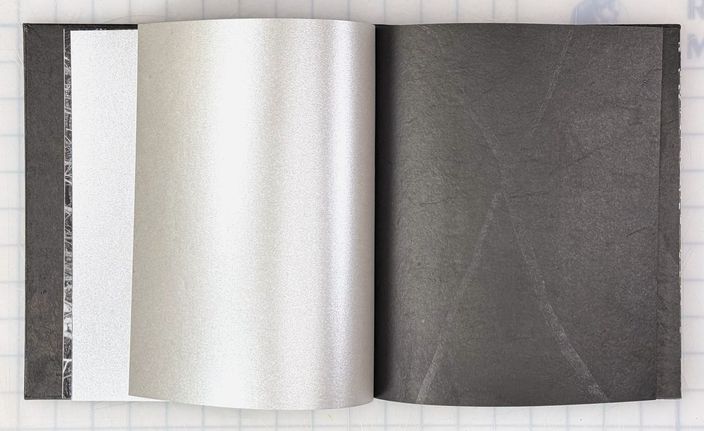
The uncanny
In the suturas
Beside the image
Suturas: writing stitched under the image
Myth / truth
The family story, and what the photographs leave out
Kind of knowledge
Sutured. Document and doubt stitched together, the seams left visible
Collaboration
Family, and the family archive