Flea Jesus
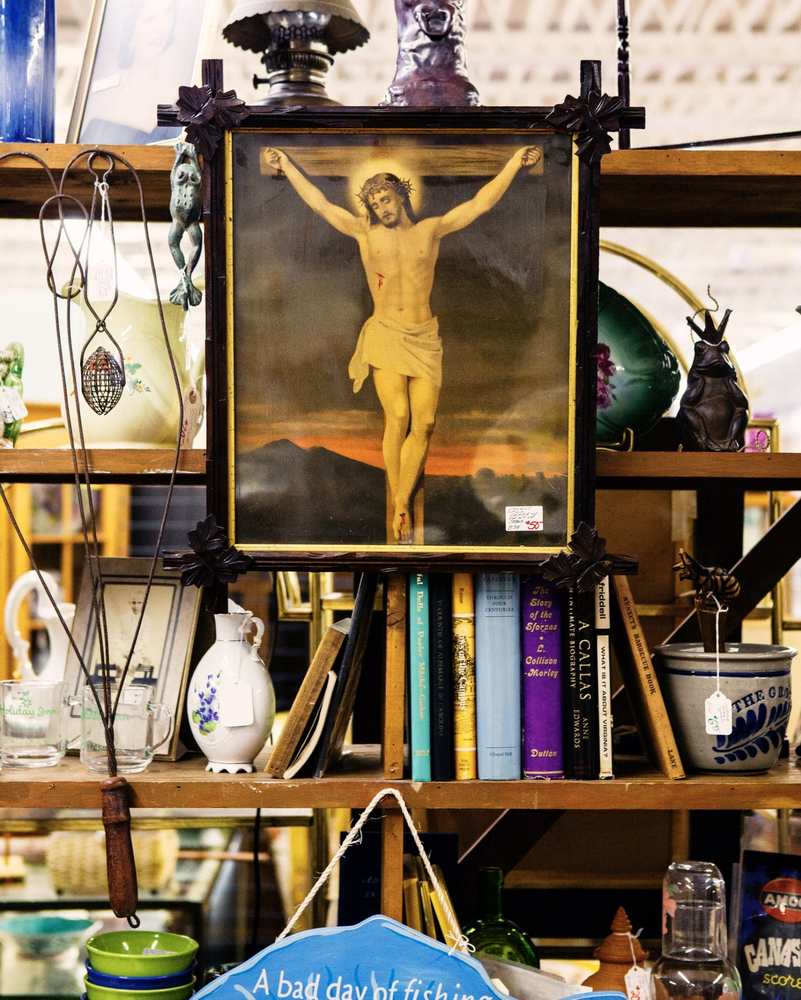
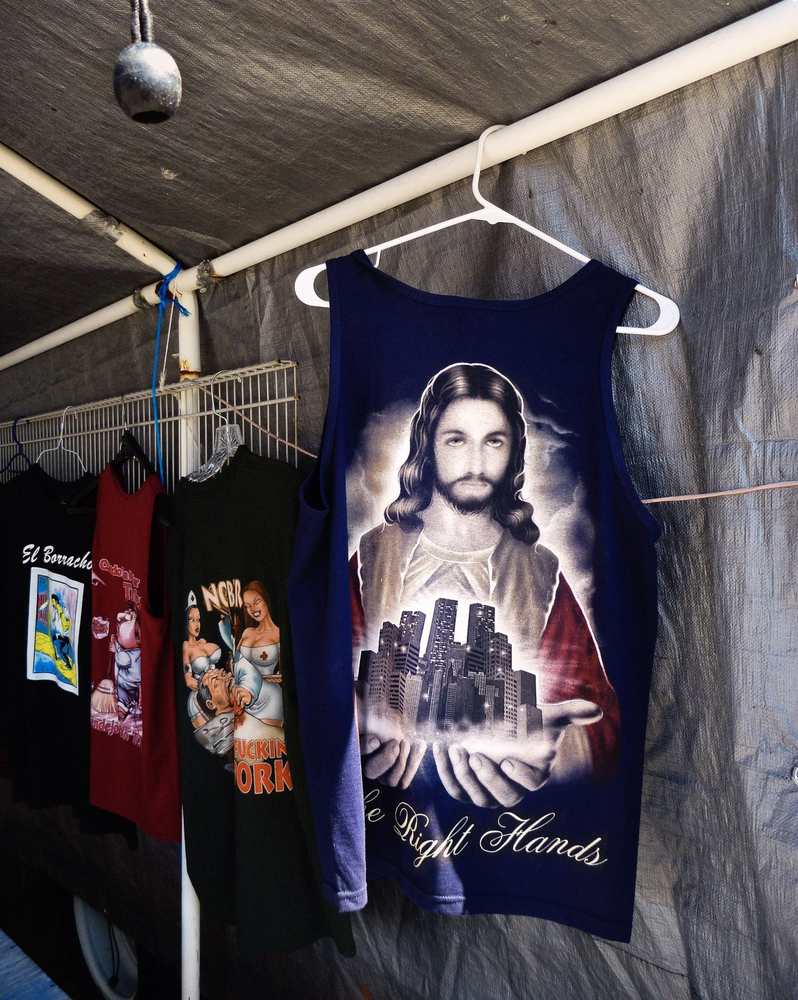
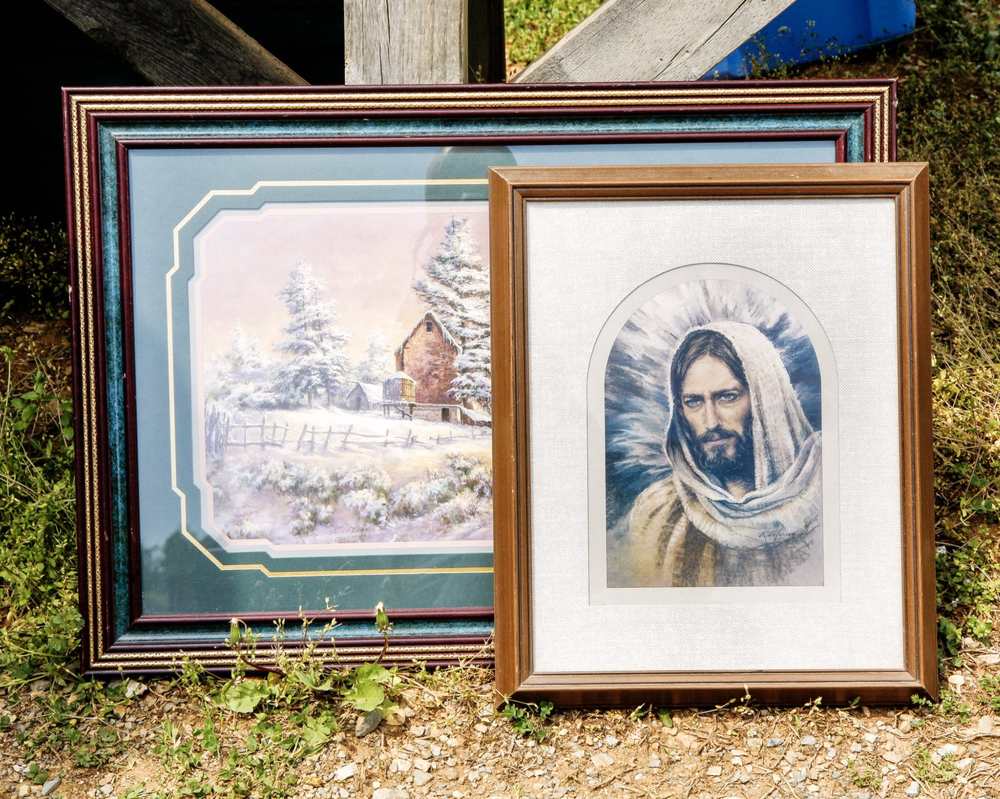
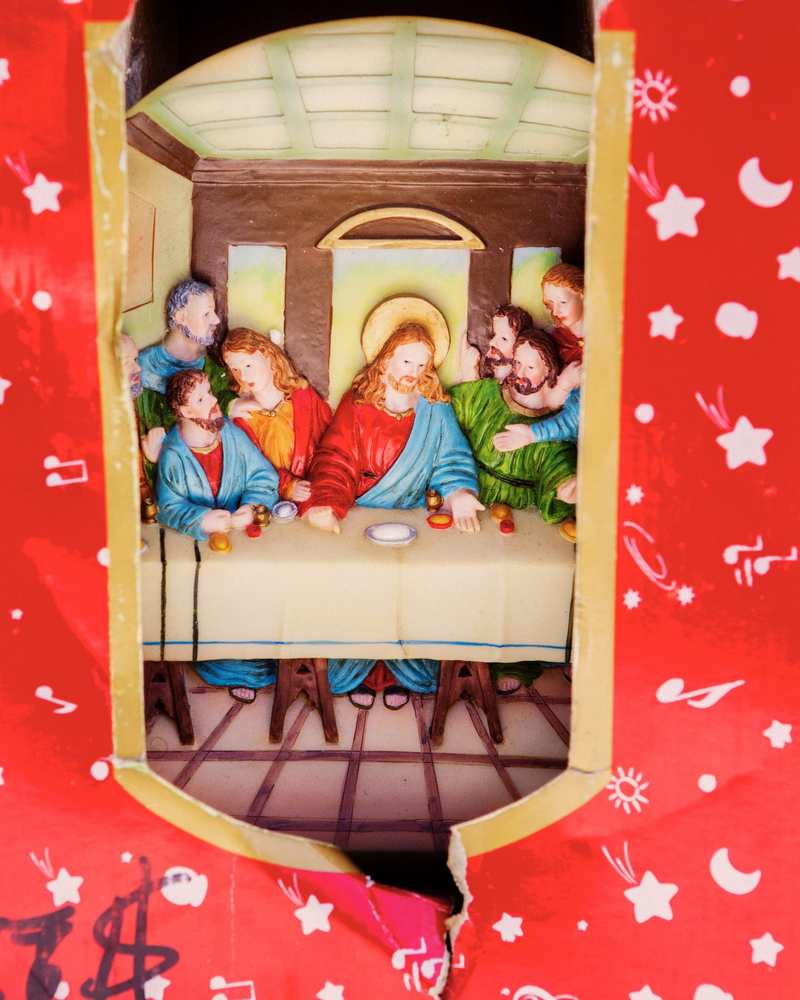
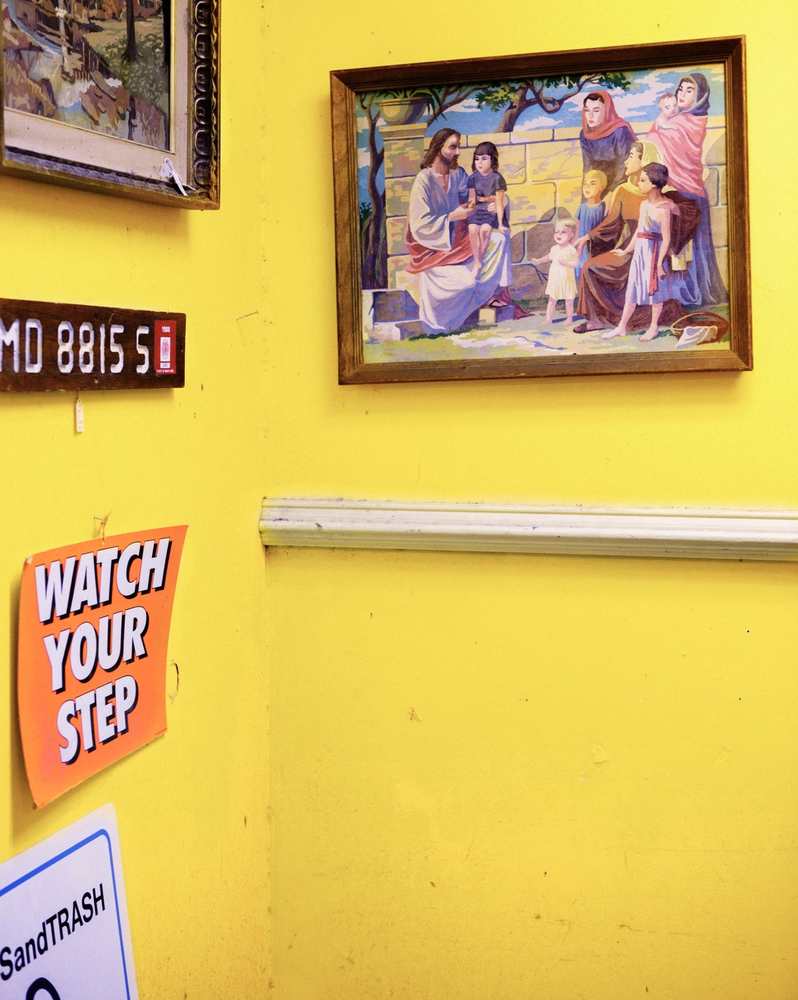
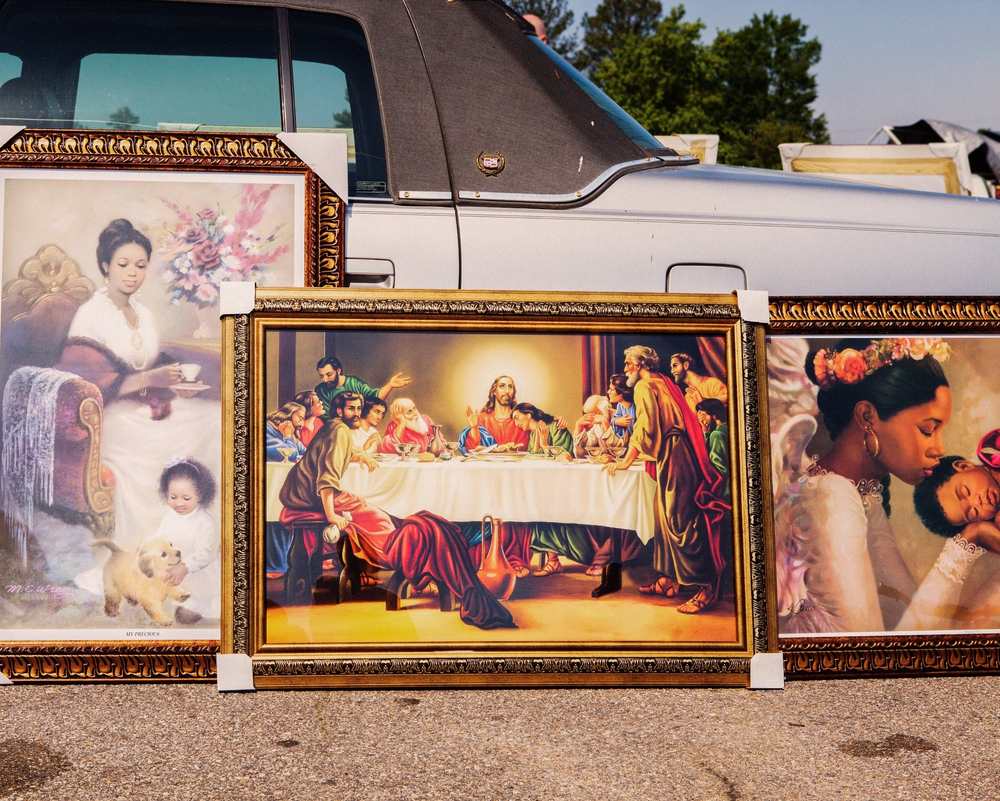
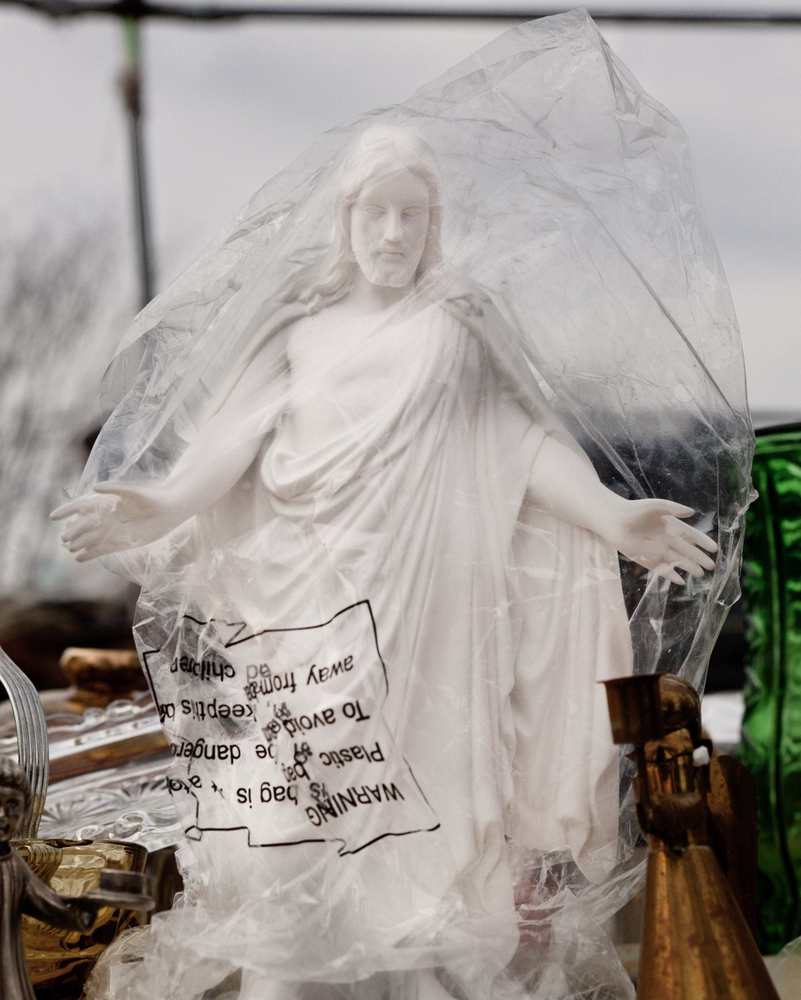
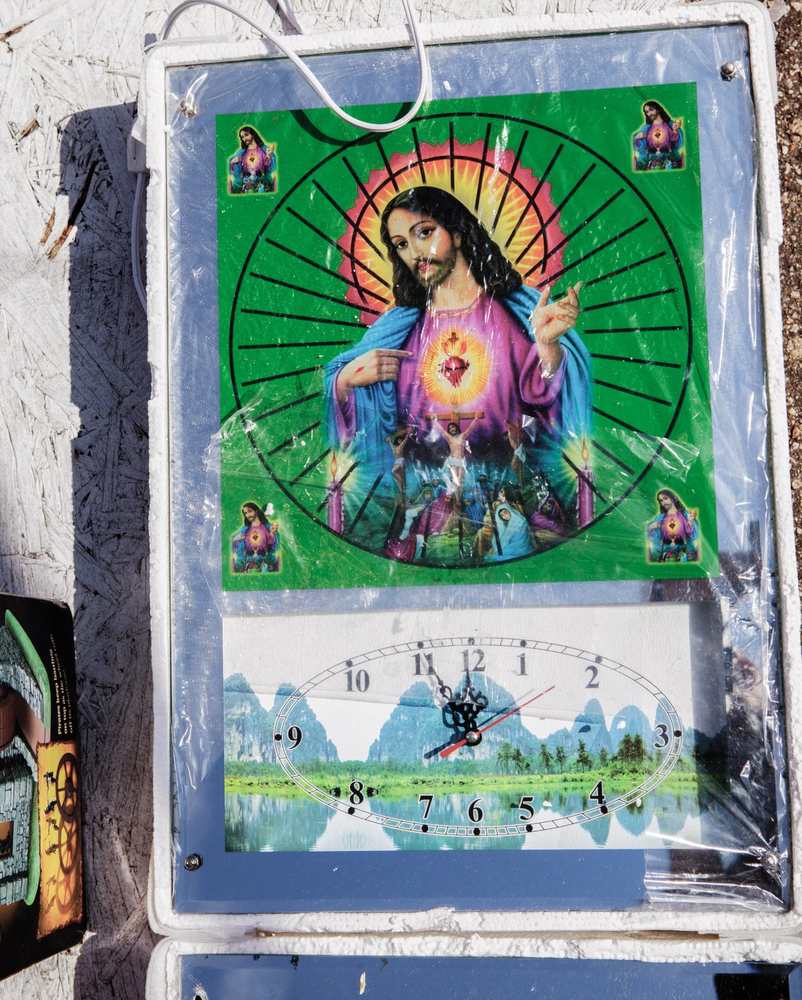
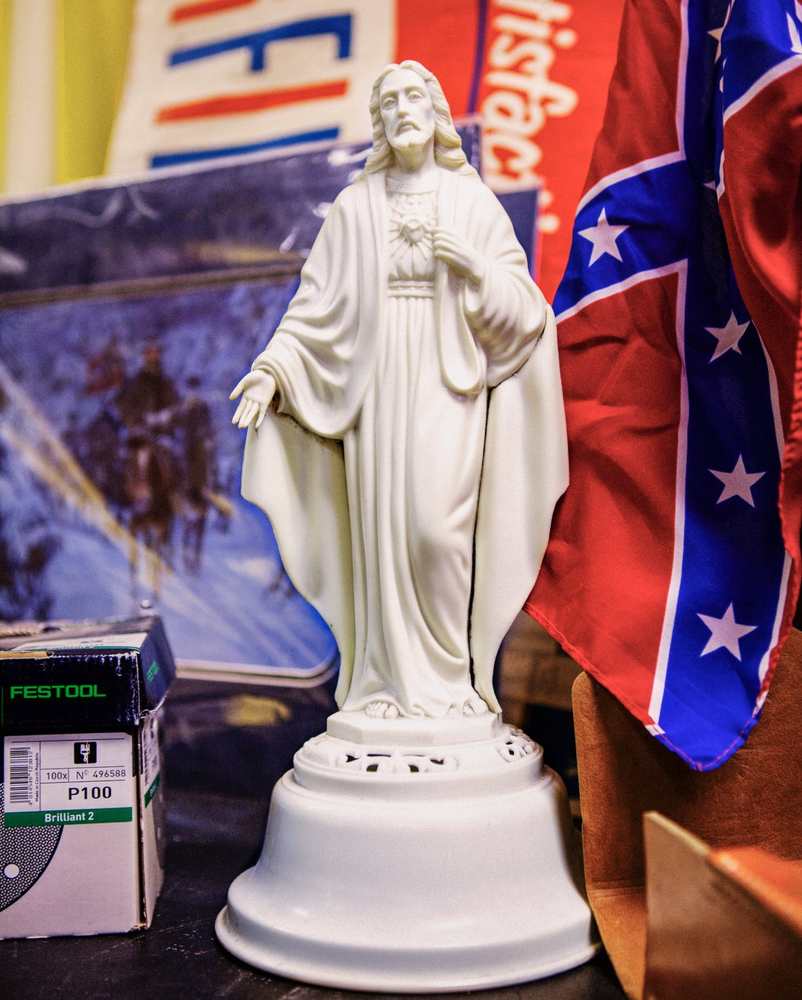
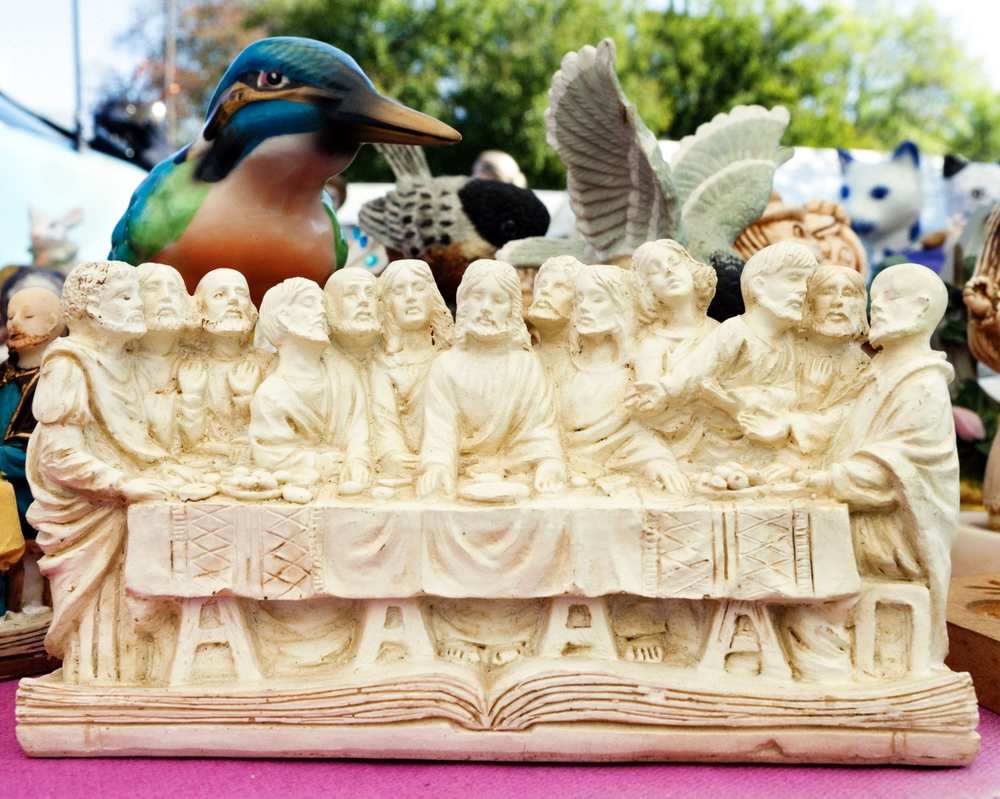
This series examines the nondescript territory between popular culture and spirituality at an outdoor flea market in Harpers Ferry. For five years I regularly visited the market, documenting any item that represented Christianity. I am still not entirely certain why. I do know I held what I now consider an elitist fascination with kitsch and a philosophical opposition to mainstream Christianity. I thought the knickknacks were crude, cheap, unoriginal, mass-produced and above all sentimental, and I wanted to celebrate the irony of capitalist materialism exposing the sacred as a sham.
Over time, my understanding of these mocked objects in a marginal market changed considerably. The images revealed more than my biases had allowed me to consider. Surrounded by truckloads of other cultural objects, the religious kitsch became complex, often humorous still lifes that, reconsidered in the present moment, carry narratives about capitalism, violence, colonialism, patriarchy, sexism, racism and much more.
Abstracted in a photograph, the kitsch object overcame its material superficiality and idealized symbolism. The objects became culturally profound and difficult to dismiss. Perhaps they are gateways to higher thought, and the prejudices one brings to them, prejudices I once shared, reveal more about the limits of a conditioned observer than about their worth in the hands of a believer.
What changed most was a kind of humility. Every one of these objects had been handled before it reached a folding table. A plaster saint or a plastic crucifix may have sat on a nightstand through an illness or hung in a kitchen for decades. Whatever I thought of them as ornament, they had done real work for someone: given comfort, held a devotion, kept a person company through something hard. The title holds that balance. Beyond the sacred and the profane, the photographs try to keep both the critique and the regard.